Live At 5:00

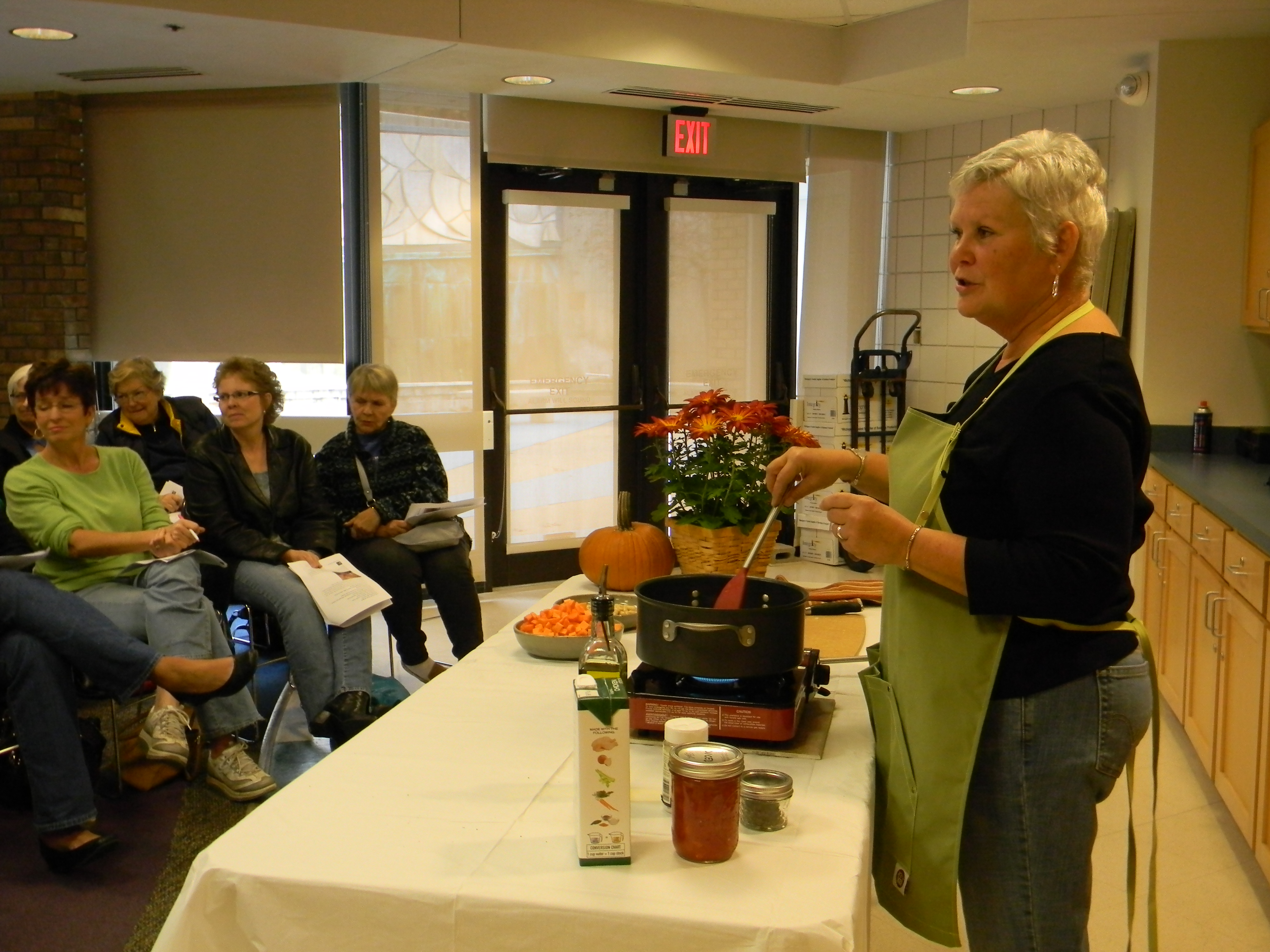
Demo table all set and ready to go

Farmer + Cookbook + Library = Cooking Demo.  Last night I had the honor to be hosted by the Portage District Library for a Meet the Chef food demo co-sponsored by Fair Food Matters.  As a life-long foodie it was great to be able to speak with other enthusiastic foodies about our passion for cooking with locally grown seasonal foods.

My faithful sou-chef Valerie

I have to say I couldn’t have done it without Val.  She has chopped so many onions she was dreaming about them in her sleep.  In the late afternoon, while chopping and sipping a Manhattan, she commented that she would forever associate the two together.  Val was always there, behind the scenes, being supportive and calming.  She collected and washed dirty dishes between sessions, replaced table clothes, stirred and served soup.  I have never felt so loved.  Putting on the demo was a culmination of a very busy year for us.  We prepared 3 soups for over 70 people:  Cannellini Bean, Curried Pumpkin and Harvest Minestrone.

Roasting Garlic for Cannellini Bean Soup

12 heads of pureed roasted garlic, ready to be added

Since this was my first food demo, I was feeling both nervous and excited.  Looking back it all seems like a blur, but I do remember that once I started talking about our farm, and how it has changed my life, I relaxed and simply shared what I have come to love: growing and cooking fresh seasonal food.

Explaining how to roast sugar pumpkins
Sauteing onions for the minestrone demo

Chopping kale for minestrone

After the demo was finished, three soups were served, while I signed cookbooks.  I was warmed by the positive feedback on our offerings and was fortunate enough to sell 26 cookbooks!  Marsha Meyer the Adult Services Librarian asked if I would be interested in returning in April for another demo.  Even though they are a tremendous amount of work, I couldn’t resist.  Val’s just happy it isn’t next week!

Final product of the demo, nourishing minestrone.

Listening to feedback

“To feel safe and warm on a cold wet night, all you really need is soup.” –Laurie Colwin
Posted in Uncategorized | 7 Comments

Frost on the Pumpkin

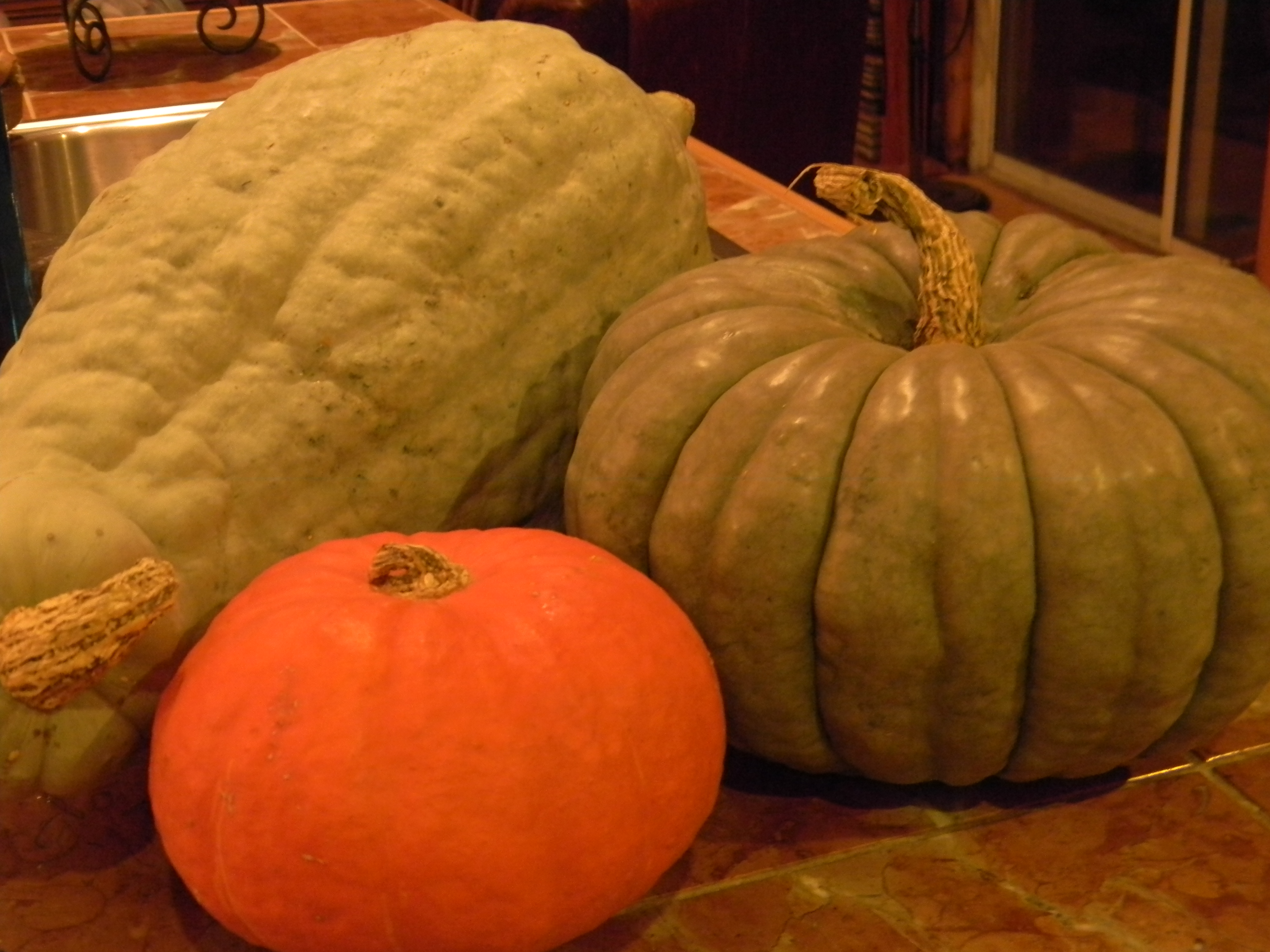
Kuri, Hubbard and Cinderella Hybrid

The frost in on the pumpkin and our market season is winding down.  I love the transitional season of fall.  Harvesting in the fields is slower and quieter.  The earth is damp and full of scent.  It surprises me that we still have produce to bring to market.  We have had several frosts, yet some veggies are humming along.  There are still plenty of fall lettuces, spinach, arugula, turnips, beets, rutabaga and kale .  It’s been a great market season for us.  The earth has blessed us with so much abundance.  Our customers have been generous with their support and we are grateful.  Market days are full of laughter, conversation and surprises.  I look forward to each and every one of them.

I find that during this time of year I am craving all sorts of comfort foods: stews, casseroles, gratins and soups.  One of my favorite fall soups in Curry Pumpkin.  I love making it with fresh sugar pumpkins that are plentiful at the farmer’s market.  We often purchase several of these to store for the months ahead.  There are three ways to approach making pumpkin puree: roasting, boiling or microwaving.  I far prefer the roasting method, which brings out the richness of the pumpkin, making it worth the effort. You might consider roasting two or three pumpkins when you’re doing this, as the puree is easily frozen.  I freeze the puree in 2 cup increments, as this is appropriate for many recipes.  Although I am an advocate for roasting pumpkins, you can’t beat the convenience of canned pumpkin.  If the choice is roasting pumpkins for puree or making the soup tonight because you can a craving for it, the canned pumpkin will win out.  Make sure you save the seeds if you do elect to roast your pumpkin, they are wonderful toasted.

How to roast a sugar pumpkin:

  • Cut the pumpkin in half and discard the stem section and stringy pulp.  Save the seeds to toast (this is best done when the seeds have not dried with the stringy pulp on them!) Rinse the seeds.
  • In a shallow baking dish, place the two halves face down and cover with foil
  • Roast in preheated 375 degree F oven for about 1 1/2 hours for a medium-sized sugar pumpkin until tender
  • Once the roasted pumpkin has cooled, scoop out the flesh and puree or mash it

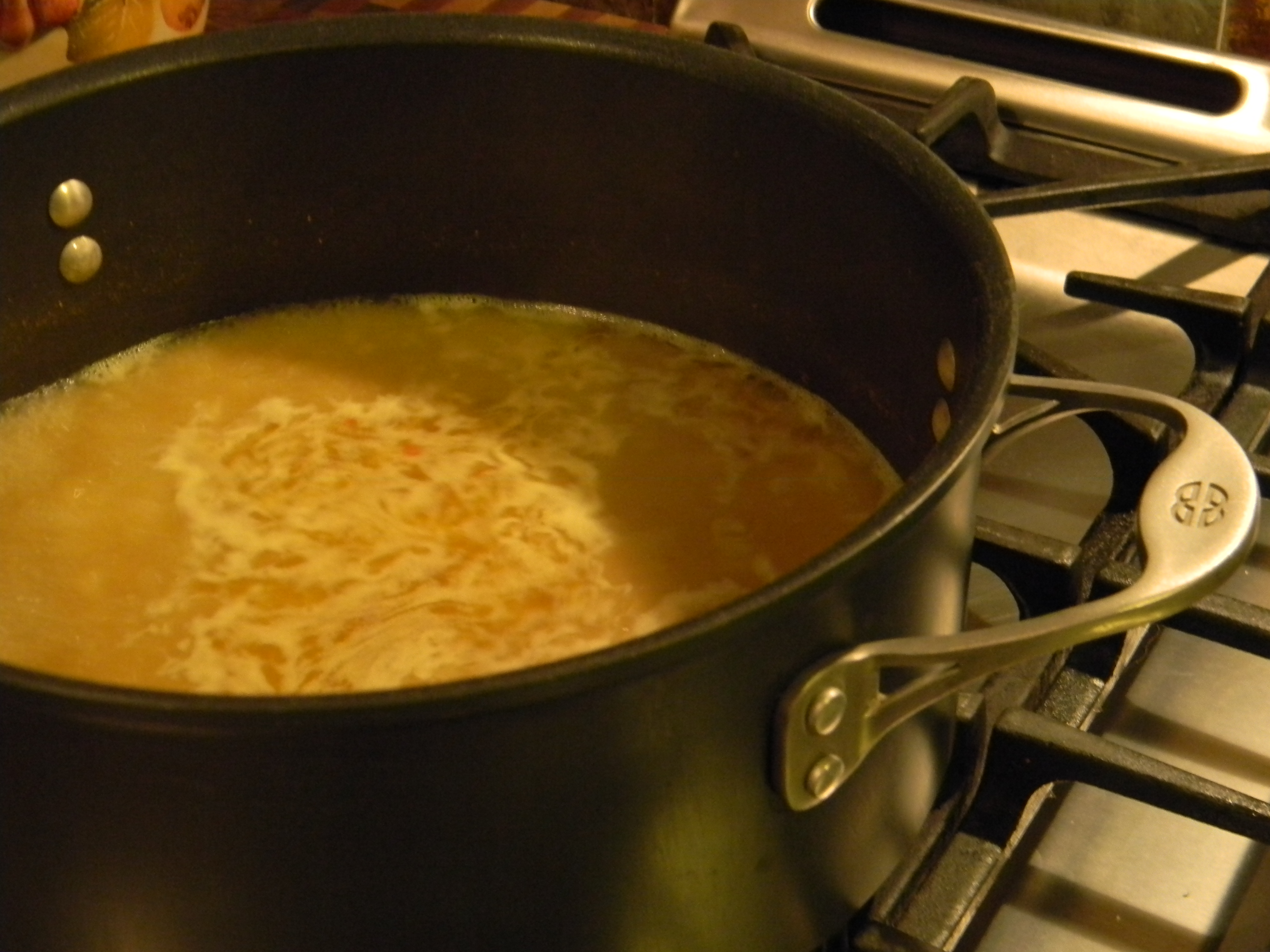
Simmering stock and spices

This soup can also be made with Long Island Cheese or Hubbard Squash will equal success.  We make this soup for Thanksgiving, but I can never wait to the end of November to have it!  If you’re doing during a holiday when the kitchen is a little wild, you can make it a day ahead and gently reheat it.

Curried Pumpkin Soup:

  • 1/4 cup unsalted butter
  • 1 cup onion, chopped
  • 2-3 cloves garlic, minced
  • 1 Tbsp Madras curry powder (this amount can be adjusted to suit your taste, less if you want a milder curry flavor)
  • 3/4 tsp Kosher salt
  • 1/4 tsp ground coriander
  • 1/4 tsp crushed red pepper flakes
  • 3 cups organic or homemade chicken stock
  • 2 cups roasted and pureed fresh pumpkin (alternatively you can used 1 15 oz can pumpkin
  • 1 cup half and half
  • Sour cream and fresh chives to garnish (the sour cream will also let you control the heat in is soup)
  1. In a large saucepan of Dutch oven saute the garlic and onion in the butter until soft and translucent.  Add curry powder, salt, coriander and red pepper flakes; simmer 1 minute.  Add stock and boil gently uncovered for 15-20 minutes.
  2. Stir in pumpkin and half and half; cook 5 minutes.  Puree in batch in blender, or use an immersion blender in the pot until creamy.  Serve warm or reheat to desired temperature, but do not boil.
  3. Top with a dollop of sour cream and chopped fresh chives.
Serves 4

Creamy and warming!

“There is nothing like soup.  It is by it’s nature eccentric: no two are ever alike, unless of course you get your soup from a can.”  –Laurie Colwin


Posted in Farm News, Recipes, Uncategorized, Vegetables | Tagged , , , , | 2 Comments

Harvesting Uncommon Gold

Beautiful earthy turnips

Val and I have made a commitment.  We are vegetable farmers who are concerned about the price of food, how it is grown and bringing great food to market.  To that end we have decided to eat as much from our farm as possible.  This will mean choosing to eat meat only once or twice a week.  We have put up a great deal of food for the winter months.  We canned tomato sauce, diced tomatoes, roasted tomatoes, Italian tomatoes and salsa.  We pickled beets and made applesauce. We have frozen pole beans, Romanesco flat beans, haricot verts, cannellini and Hutterite beans, corn, cherry tomatoes, paste tomatoes, cauliflower and broccoli.  We have also frozen apricots, peaches, blueberries, strawberries and raspberries for our morning smoothies.  We have winter squash, garlic, potatoes and onions in our root cellar (alias garage).  We have dried dozens of trays of fresh herbs to flavor our meals, along with 36 four-ounce jars of pesto.  Although we choose not to be total vegetarians, we are eating many more legumes. We grow a lot of root crops and there are literally hundreds of ways to prepare them.  We love any kind of roasted vegetable and I have learned new ones since coming to live on the farm.

Name this flower....

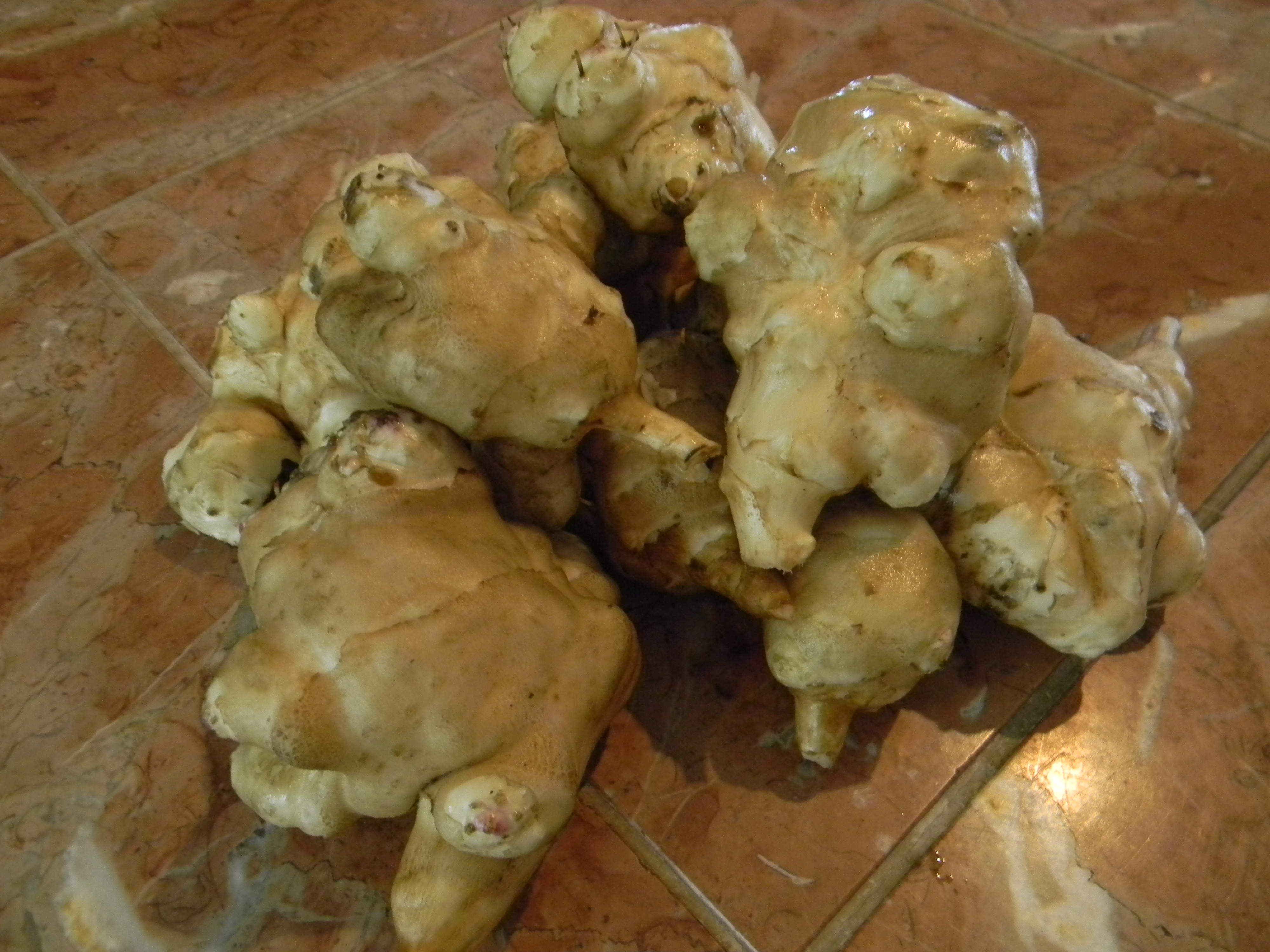
I had thought I was pretty well versed on a large variety of foods, yet I had never had a turnip before I came here, let alone a ‘sun-choke’.  Val had actually wanted me to try them several times, but for a variety of lame reasons had never got excited about it.  My mistake!  Sun-chokes, or Jerusalem artichokes are native to Michigan.  They are tubers that develop below each plant on long runners.  They are slightly nutty in flavor, similar to a walnut, and are delicious roasted, added in soups or baked in gratins.  Their peel is very thin, so can be left on to keep as much of the precious tuber in tact.  Just scrub them like a new potato.

Large, meaty sun-chokes fresh from the garden

We often roast veggies for dinner.  This time we roasted carrots, parsnips, turnips, rutabaga (or rutabaggie as our Minnesota neighbor calls them) onions, garlic and of course sun-chokes.  I usually roast potatoes on a jelly roll pan, but I was roasting so many veggies I decided to use my roasting pan.  I simply peeled (if needed) and sliced each one keeping the pieces as similar in size as possible.  I preheated the oven to 425 degrees F, then put them all in the roasting pan.  Next I drizzled several tablespoons of olive oil over them and tossed them with my hands to coat.  Finally I sprinkled them with sea salt and chopped fresh thyme.  Into the oven they went with the timer set for 20 minutes.  In 20 minute intervals I would toss them with a spatula.  Depending on the amount you’re roasting, this can take anywhere from 1 hour to an hour and a half.  Usually the onions will start to caramelize and the vegetables brown on the edges.  Veggies prepared this way can be a meal in themselves; and I have to admit I don’t really miss the meat.

Savory and satisfying!

“If more of us valued food and cheer and song above hoarded gold, it would be a merrier world.”  –J.R.R. Tolkien

Posted in Essays, Farm News, Food Issues, Raves, Recipes, Vegetables | Tagged , , , , , , , | 4 Comments

Simple Pleasures: Shelling Beans

;

A chair, the farm and a basket of beans

Our farm season is soon coming to a close, yet we still have much to offer at our market stall.  Beautiful lettuces, spinach, turnips, rutabaga,  three kinds of kale, Swiss chard and beets have all made their appearance.  As farmers we are always looking for ways to extent the season, and bring unfamiliar veggies to our customers.  This year we ventured into fresh shelling beans.  A shelling bean is any bean that is grown primarily for the edible seed inside.  Almost any bean that is destined to be eaten dried can be eaten fresh, and that was the kicker.  I had never even seen fresh shelling beans, much less tasted them. This year we grew cannellini, black turtle, Hutterite, Saturday-night specials, cranberry and kidney.  It was fascinating to watch them develop and learn when each variety was ready to harvest.  We checked weekly to make sure the beans within the pods were developing without incident.  By the end of August the cannellini and black turtle were ready to start harvesting.  We recognized that each variety would be harvested multiple times.  Although labor intensive, it was indeed a labor or love.

Much to our surprise our shelling bean experiment went better than we could have imagined!  The first time we offered fresh cannellini, one of our customers bought all 15 pounds!  Some of our customers were thrilled, some wondered why in the world we brought such shriveled, damp, ugly beans to market.  It was moving to see the diversity of our customer base.  When we brought the black turtle beans, one Mexican woman cried. She bought them to put in her tamales, then returned the following week with her husband to buy more.  Beans are such basic foods for so many people.   I soon realized that many people had only seen these beans dried in plastic bags or canned and had never seen them fresh.  Although a convenience, canned beans are usually too mushy for my taste.  Dried beans are definitively an improvement, yet it is sometimes a challenge to be organized enough and remember to soak them the day before.  The texture of fresh shelling beans are something so unique, that its hard to not to wax eloquently about them.  Fresh cannellini beans practically make me swoon.  We have put up  dozens of bags for winter, as once they are shelled they can be placed directly in the freezer without blanching to preserve their freshness.

One way to enjoy our favorite shelling bean: the cannellini, is in a simple bean bowl.  Mix yourself a drink, sit in a comfortable chair with a view of something soothing (we love to sit between our fields and listen to the sprinklers).  I find it sweetly contemplative to shell beans.  I love how the pod gives way to my fingers and the sound of each bean dropping into the bowl.  You will have several cups in no time.  We like to shell multiple cups so that when we cook them we can have both bean bowl and use them for an additional recipe the following day.  Make sure not to add salt to the beans until after they are cooked, as adding salt to the cooking water will toughen the beans.

The Bean Bowl

  • 2 cups fresh cannellini beans, shelled
  • Water to cover beans, plus an additional one inch
  • 2-3 whole cloves garlic
  • 1 bay leaf
  • 2 Tbsp white truffle oil
  • 1/2 cup shredded Pecorino cheese
  1. Bring the beans, water, garlic and bay leaf to a boil uncovered, then reduce to a simmer for 30 minutes.  Taste a bean, if not done continue to simmer checking every 5 minutes.
  2. Put beans in individual bowls with some of the cooking water.
  3. Salt and fresh ground pepper to taste, then drizzle 1 Tbsp of the white truffle oil.
  4. Top with 1/4 cup freshly shredded Pecorino cheese.
  5. Swoon.

Serves 2

True comfort food!

  • “Simplicity is an acquired taste.  Mankind, left free, instinctively complicates life.”  —Katherine Fullerton Gerould


Posted in Essays, Farm News, Raves, Recipes, Uncategorized, Vegetables | Tagged , , , , , , , | 6 Comments

The Bitch Is Back!

The beautiful calm of the Windermere Hotel

Ok.  I know it’s been two weeks, but you know the minute things began to slow down just a bit, so did my ambition!  Before we went up north for a few days, I was loosing my perspective, grumpy and tired.  We escaped to Mackinaw Island and regained our balance. Each night I would listen to the waves coming in off the straits, the gentle cadence of the horse-drawn taxis, the call of geese overhead and the occasional fog horn cutting through the mist.

Into the light.

During the day we biked around the island, talked about our farm year, made future plans, ate well, and rested our minds as well as our bodies.  I needed to look out and be calmed by the view, rather than see something that required my attention.  It was just what the doctor ordered.  What a difference a couple of days make!  I came back with renewed appreciation for our farm and the vocation we have chosen.  We hit the ground running. On Friday we harvested for Saturday’s market; then went to market Saturday.  Then we spent the next several days splitting and stacking wood.  That’s when it hit me…I have a new obsession: splitting wood.

I have never been very physical (the exception being hiking and backpacking).  I am quite content to read and write for hours.  I am a confessed daydreamer who studies how light moves through a day . Yet here I am, for the first time in my life, craving physical activity. I’m finding that movement is the necessary counter balance to my thoughts.  When I move my body my mind becomes more fluid.  When I was younger I hated to sweat.  Now it feels good to push myself to do the unfamiliar.  I smile as I split log after log and place it in the bucket of our tractor.  Sweat rolls down my face and arms.  Give me more ways to feel my muscles and body.  Let me resist the pull of aging and dive into the work that feeds me.

Respecting the power of the splitter.

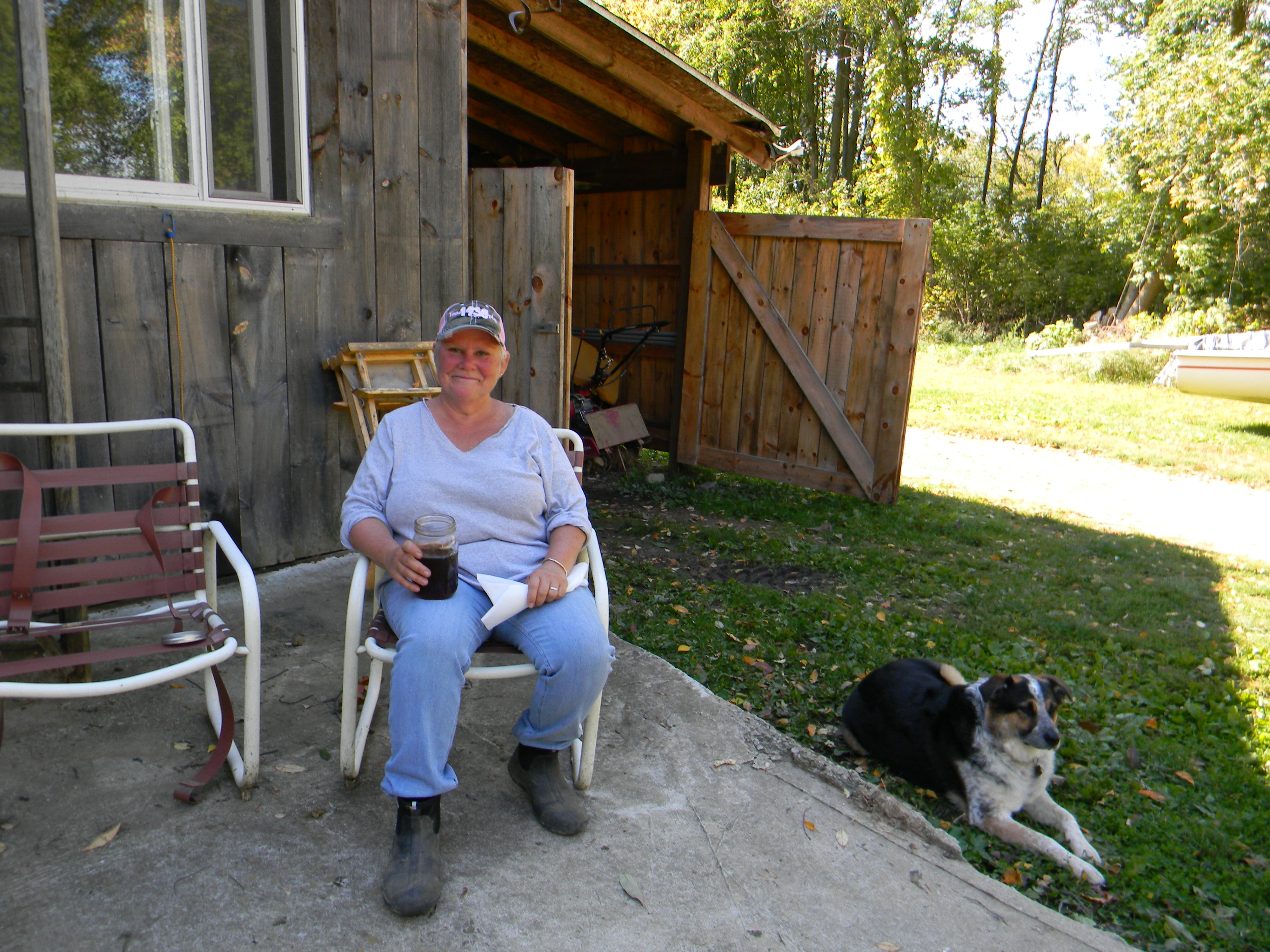
When it was time for a break, I relaxed in the shade of one of our barns.  With a mason jar of iced tea I could watch the leaves falling from the trees, while our chickens searched for grubs.  I am no longer in a fevered search for meaning.  It has been replaced with a sense of belonging to our land and all things within it.

Happiness.

“Faith it seems to me, is not the holding of certain dogmas; it is simply openness and readiness of heart to believe any truth which God may show.”  –Margaret Deland

Posted in Farm News, Raves, Uncategorized | 2 Comments

Harvest Fest at Tillers International

Strong, cared for and ready to till the land without diesel

Today Val and I went to the annual Harvest Fest, a celebration of local food, local farming and sustainable living, held at Tillers International in Scotts, Michigan.  Tillers is a 501(c) 3 non-profit organization, offering classes in farming with oxen and horses, blacksmithing, timber framing, cheesemaking, canning and preserving, chair caning, woodworking and rope-making to mention a few.  Tillers specializes in promoting international rural development through overseas trainings in farming with oxen.

We were there as vendors for our artisan soaps.  It was a perfect fall day to watch hundreds of families enjoy the music, speakers, crafts and demonstrations.  There were hay rides and face painting, along with a fabulous food tent that served everything from grass-fed beef burgers with onion jam, to Indian and Indonesian curries, Italian sausages, fresh salads and crostini.  We enjoyed both the grass-fed burgers and a delicious Beef Rendang with just the right amount of heat.  You could watch demonstrations on spinning, blacksmithing, broom making and rope construction.  The table next to us was a mentoring program for youth called: Beadventure.  This is a non-profit program that teaches bead jewelry techniques and the business skills related to sales; to educate and empower students as artistic entrepreneurs.

Jordan Beebe and Jadon Webber, proud entrepreneurs!

There were also many informational booths explaining things like renewable energy using wind turbines, composting, hydroponic growing and how to use rain barrels.  What really impressed us were how many people were asking questions, interested in learning and acquiring information, picking up hand-outs and totally immersed in the activities of the day.  What a great day!  We look forward to next years Harvest Fest.

“It seems to me that our three basic needs, for food and security and love, are so mixed and mingled and entwined that we cannot think of one without the others.”                       — M.F.K. Fisher   The Art of Eating


Posted in Farm News, Food Issues, Soaps, Uncategorized | Tagged , , , | Leave a comment

Short Break

Just a short note to let all of you know that Val & I have been sick all week.  So no post!  We will actually be taking a short break to get away for a few days to northern Michigan.  We will be back the first week of October with farms news and good food when we return.

Posted in Uncategorized | Leave a comment

A Different Kind of Pork-N-Beans

It was a hot and humid market day this Saturday.  Sweat was dripping off our faces as we filled our stall and waited on customers.  I had just wished a customer a happy Labor Day weekend, when my neighbor Scott muttered under his breath, “For us it’s a day of labor.”  This is often true when it comes to farming.  Memorial Day, July 4th and Labor Day are not holidays but days of seasonal labor.  The calendar runs different for us.  Yet we had just finished our heirloom tomato season, and that meant one thing to us:  slowing down. Because of what we have chosen to grow, we turn a corner after tomatoes.  This meant although we would be working on Monday, we could afford to take a day off on Sunday.  When the heat wave also broke, we woke up in excellent moods.  After lingering over morning coffee, we walked the farm.  Val decided to pick and shell some fresh cannellini beans for us to freeze, while I went back to the house to continue what I had started last night.

I don’t know about you, but when I was growing up pork-n-beans was basically beans and wienies.  Thank goodness times have changed.  These days when I think of pork and beans I think of black beans and a savory Cuban pork-shoulder roast.  We grew 6 varieties of shelling beans this year, Black Turtle being one of them.  We are just beginning to harvest some of them, so in this case I used dried black beans.  These were soaked in water overnight.  The roast was marinating in the refrigerator in a rub of salt, cumin and garlic, along with the juices of fresh lemons and limes.  The beans would be made into a light and fresh corn, bean and sweet pepper salad.  This would be a great end-of-summer accompaniment to the pork shoulder roast.

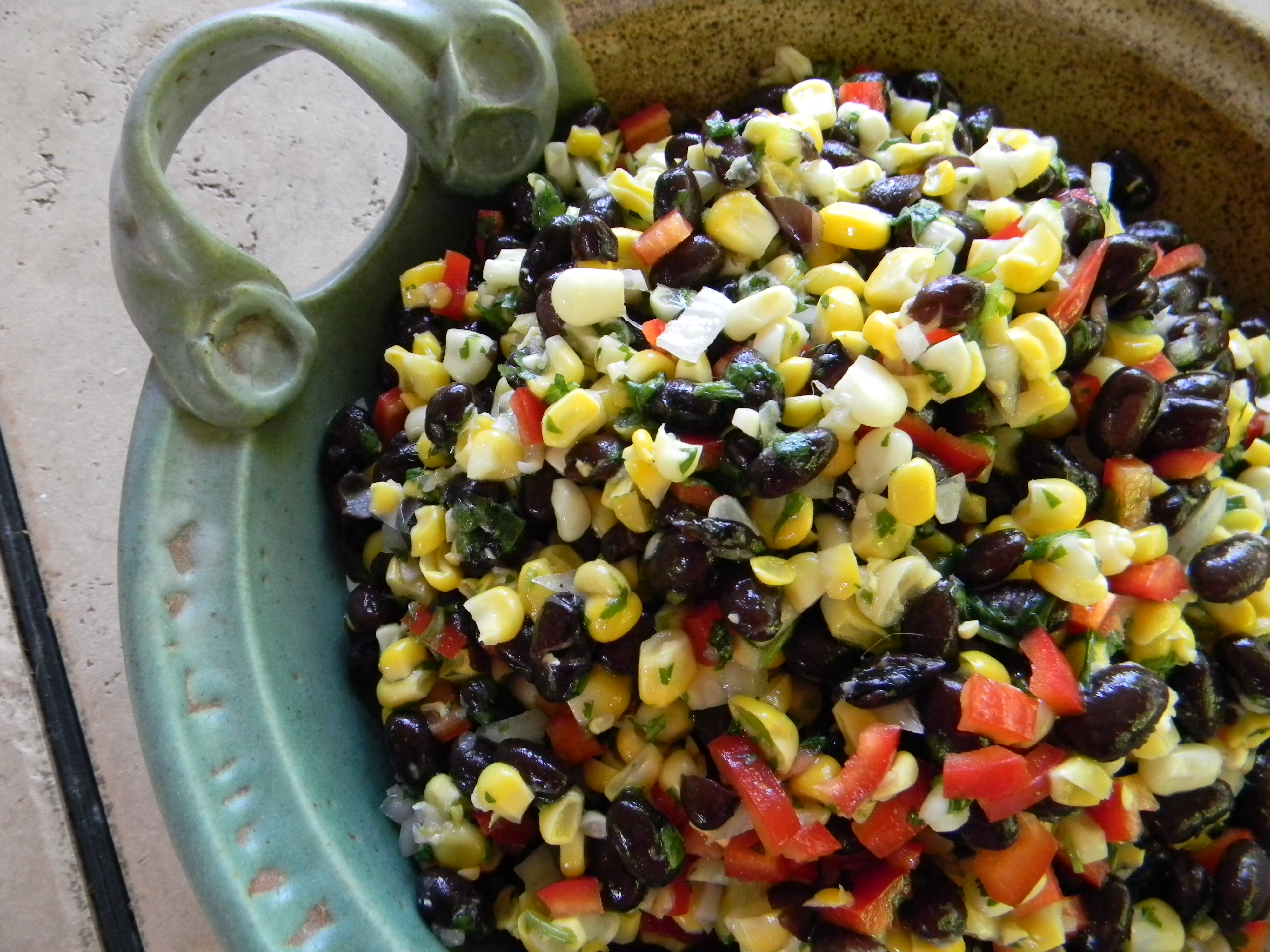
Colorful and festive black bean and corn salad

Black Bean and Corn Salad:

  • 2 cups cooked black beans (1 cup dried, soaked overnight)
  • 2 cups fresh or frozen corn (about 4 ears if fresh)
  • 1/2 cup yellow onion, chopped
  • 1 cup red sweet pepper, chopped (we used Bull’s Horn)
  • 1/2 cup fresh cilantro, finely chopped
  • 1/4 cup fresh lime juice
  • 1/2 cup canola oil
  • 1 tsp cumin seeds, toasted and ground
  • 1/2 tsp salt
  1. Place the black beans and their soaking water in a heavy pan with a tight-fitting lid.  Add enough water to cover the beans by one inch.  To this add two cloves of garlic and one bay leaf.  Bring to a boil uncovered, then boil for 10 minutes. Reduce heat to low, cover and simmer for 1 1/2 to 2 hours, stirring occasionally.
  2. When beans area done, drain and rinse under cold water.  Place in large bowl and set aside.
  3. Blanch fresh corn in boiling water for 3 minutes, then put in ice water.  Cut kernels off cob to measure.  If using frozen corn, just thaw and measure.  Add to beans.
  4. Seed and chop sweet pepper. Mince fresh cilantro and add to bowl.
  5. Chop onion and add to bowl.  Chill salad at least 2 hours before dressing.
  6. Toast cumin seeds by placing them in dry skillet on medium heat until they darken in color, being careful not to burn.  Place cooled seeds in spice or coffee mill and grind.
  7. Mix lime juice, oil, cumin and salt together.  Dress salad.
Yields 4-6 servings

Drizzled with roasting juices and ready to enjoy

Marinated Cuban Pork Shoulder:

  • 3-4 lb pork shoulder roast
  • 6 garlic cloves, 4 for rub and 2 slivered for roast
  • 2 tsp salt
  • 1 tsp ground cumin
  • 1 tsp oregano
  • 1 medium yellow onion, sliced thinly
  • Juice from 3 limes and 3 lemons
  1. To prepare roast to marinade: Cut small slits over surface and push in slivers of garlic.  Next in stick processor or mortal and pestal, place salt, oregano, cumin and garlic cloves together and combine into a paste.  Rub over entire roast and place in glass or pottery dish.  Pour lime and lemon juice that have been mixed together over roast.  Marinate overnight, turning occasionally before and in the morning.
  2. Preheat oven to 375 degrees.  Remove roast from marinate, reserving marinade.  Pat dry and place fat side down in Dutch oven.  Sprinkle onion slices over roast.  Roast for 30 minutes, uncovered.
  3. Meanwhile, place marinate in saucepan and boil gently for 10 minutes.
  4. After 30 minutes, turn heat down to 325 degrees.  Drizzle a spoonful of marinade on roast and cover.  Bake for 2 1/2 hours, drizzling a spoonful of marinade every 30 minutes.
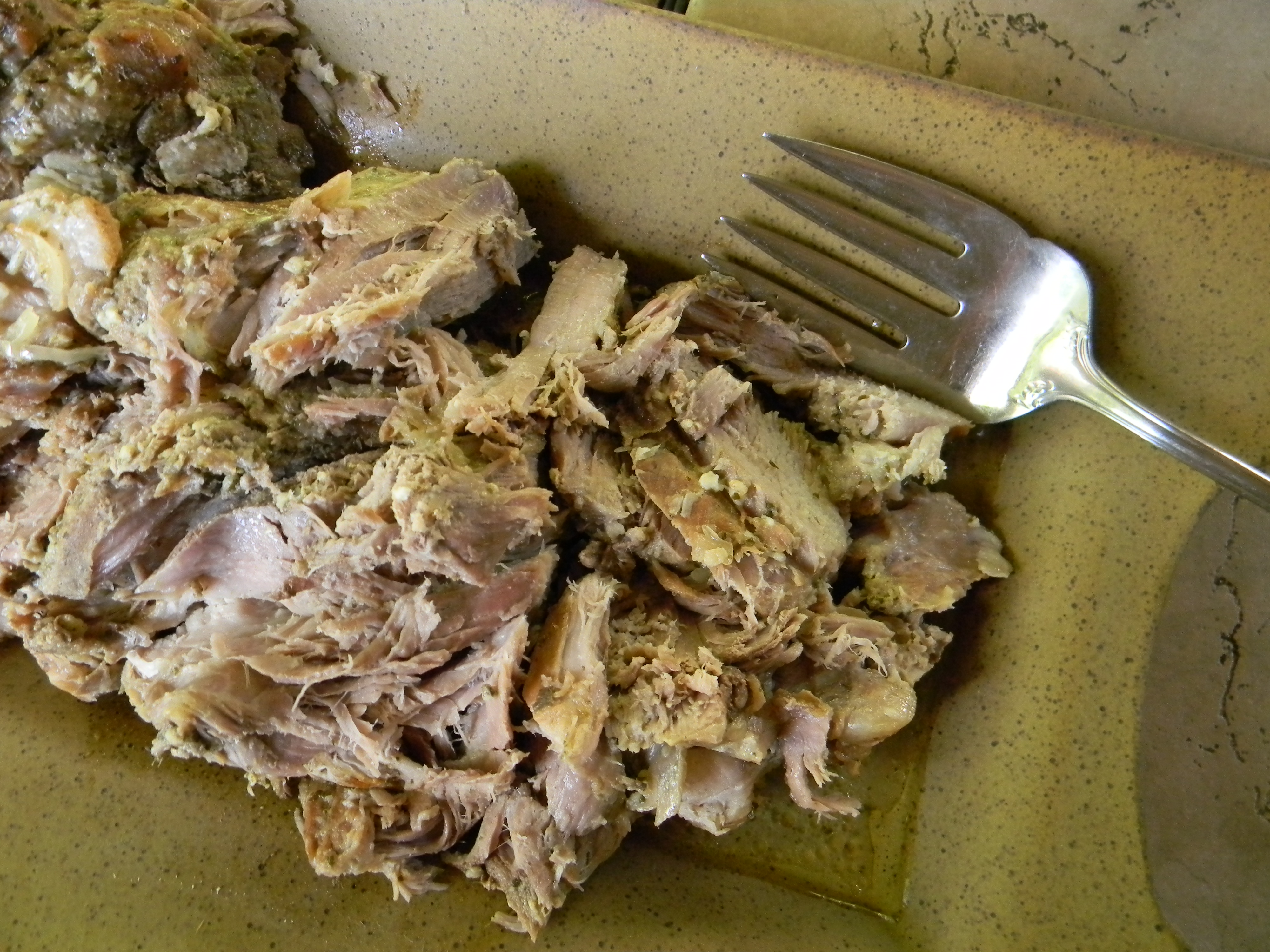
  5. Let roast rest for 15 minutes.  Don’t attempt to cut slices, but pull pieces off gently and arrange on platter.  Spoon some of the cooking juices over roast. Pass extra juices at table to spoon on plates.
Yield 4-6 servings

Dig in!!

If you have any leftovers, pull pork for using in a quesadillas.  You’ll love it!

Posted in Raves, Recipes, Vegetables | Tagged , , , | 6 Comments

Salsa-mania!

As August comes to a close, our tomato month would not be complete without a post about salsa.  Sunday, our day of rest included canning 21 quarts of the stuff!  Have you ever tried to stir over 50 cups of veggies in a pot?  You will discover muscles in the nether regions of your arms; and this is just the first batch.  We often give gifts from our kitchen, and salsa is a favorite.  My nephew Ian in-particularly loves getting jars of this zesty concoction.  Maybe its the garlic, or the ripe tomatoes, or maybe its the roasted poblano peppers; but this stuff gets rave reviews.

In the beginning, there are the tomatoes...

I don’t know why I like putting up food so much.  When I consider that we planted these tomatoes in our greenhouse in April, transplanted them to pots in May, then put them in the ground in June, it’s no wonder that translating them into a finished product is so satisfying.  This land teaches us the meaning of abundance, through stewardship and hard work.  When we open each jar during the colder months, we will be warmed by thoughts of summer.

Adding one of the key ingredients

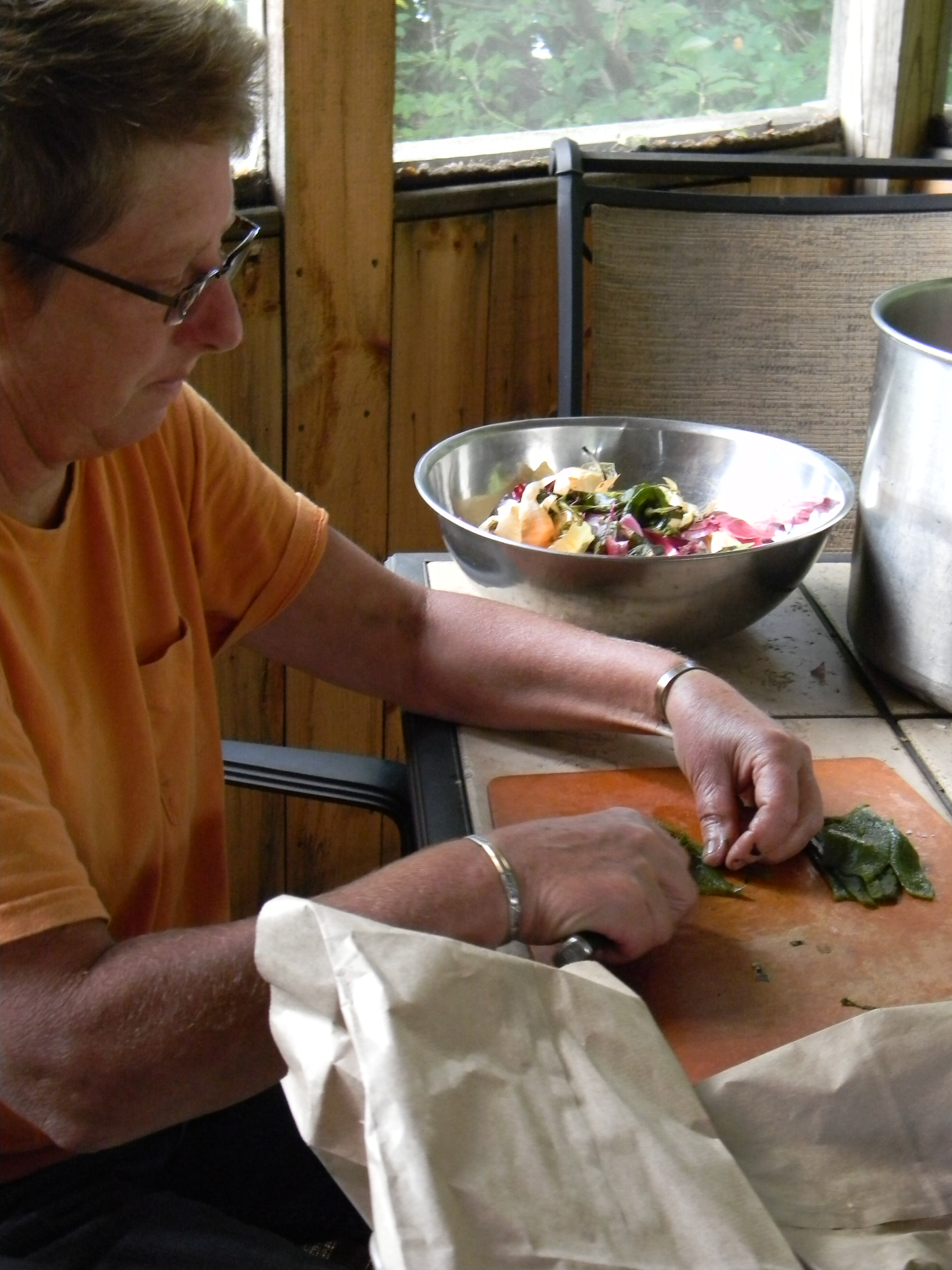
There are many approaches to salsa.  We like ours zesty, but not blazing.  There is plenty of garlic, onions, jalapeno and cilantro, but one of the key ingredients is roasted poblano peppers.  We blister them on the grill, then put them in paper bags to steam.  Once cooled, the skins and seeds are removed, then they are chopped and added to the pot.

Peeling poblano peppers is a little tedious, but worth it!

If fact, we found spending the day putting up salsa, to be a little romantic.  We felt homey, surrounded by smells of the season, each other and the cool breezes off the lake.

Beautiful, fresh and ready to go....

Kim’s Garden Salsa:

  • 16 heaping cups (approx one peck) of paste tomatoes, cored, seeded and chopped
  • 2 cups yellow onions, chopped
  • 2 cups red onions, chopped
  • 1 cup roasted poblano peppers, skinned, seeded and chopped
  • 3 jalapeno peppers, seeded, membranes removed and minced
  • 2 heads garlic, cloves sliced
  • 1 cup fresh cilantro, chopped
  • 1 Tbsp ground cumin
  • 1 Tbsp Kosher salt
  • 1 Tbsp oregano
  • 1/2 cup white vinegar
  • 1 6 oz can tomato paste, plus one can water (I like Contadina)
  1. Place all ingredients in large kettle on medium-low.  Stir frequently until tomatoes start to weep and release their juices.  It is important to heat this slowly or you will scorch your tomatoes.
  2. While you are heating your ingredients, have all your canning jars assembled and your water bath heating. (I won’t go into detail about water bath canning, but directions are easily found on the internet or in a good basic cookbook)
  3. Bring your salsa to a simmer, but not rapid boil.  Simmer for 30 minutes, stirring frequently.  Taste and adjust seasoning (ie: more salt, cumin, jalapeno)
  4. Ladle salsa into hot prepared quart or pint jars, leaving 1/4 inch head space and process for 20 minutes.
Yield:  6-7 quarts or 13-14 pints

Break out the chips!

Salsa is an expression of your personality.  Be sure to adjust to your own preferences.  Add more jalapeno or whatever suits you.  Tone down or crank up the heat, but above all, share the abundance!

Posted in Uncategorized | 2 Comments

Swimming In Heirloom Tomatoes!

I know….it’s my third tomato post, but what in the world is August for if not tomatoes?  When I returned home from market on Friday and unloaded the van, I went into the barn to find every available surface covered with tomatoes.  I went about pulling and packing for the following market day.  We have a large garbage can for the fruit that has ‘gone south’ and can’t be used.  This gets divided between our chickens and our compost pile.  The tomatoes that are merely bruised or damaged in some way I put to the side to roast in slices and freeze.  By the time I was finished sorting for Saturday, I had a whole tub of heirlooms.  I realized that these would take way too much time to roast in slices.  I needed to do something different.  I was staring at the vibrant colors of Caspian Pinks, Cherokee Purples, Marmondes and Mr. Stripeys, when an idea hit me.  What would happen if I roasted them all at once?

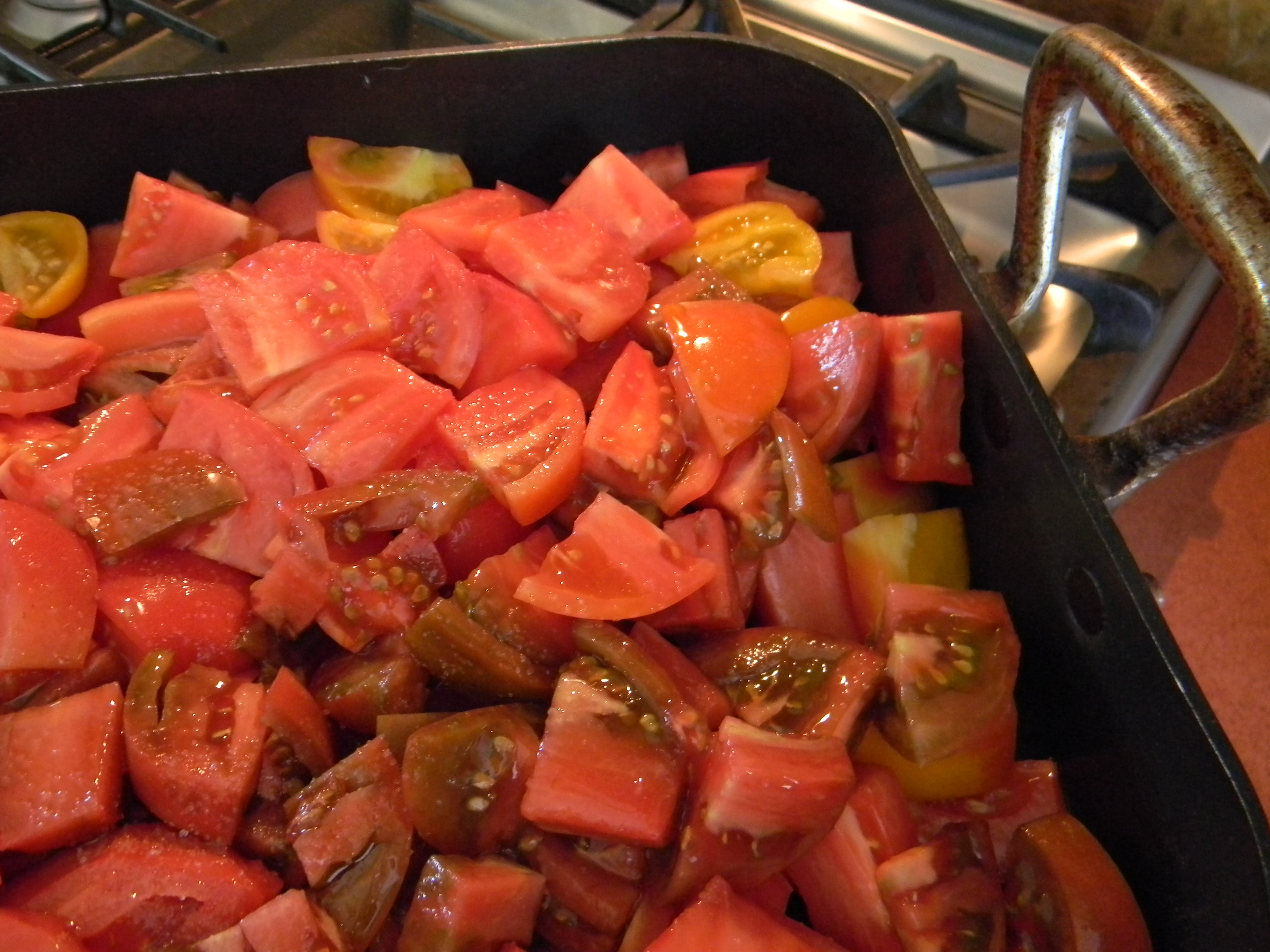
No such thing as a wasted heirloom. Here they are ready for the oven.

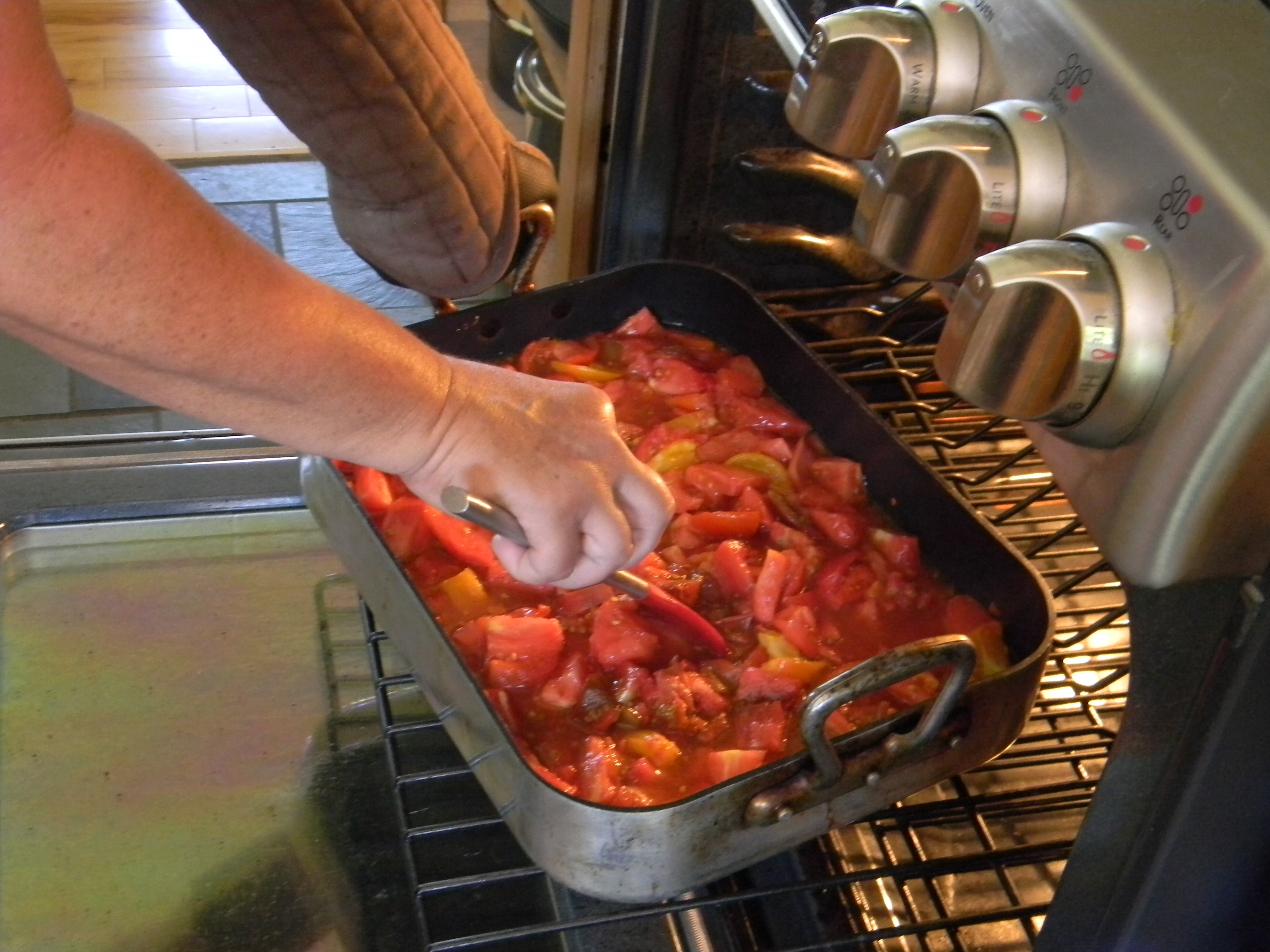
On Sunday I brought them all into the kitchen.  I got out my roasting pan and decided it would hold at least half of them at one time.  I then proceeded to cut out the spots, imperfections and bruises, then cut them up in manageable pieces.  This when pretty fast and I had the whole roasting pan filled in about half an hour.  I set the oven at 325, drizzled them with olive oil, then sprinkled them with salt.  In they went.  I set the timer for 30 minutes and went on to cleaning herbs I had picked that morning to put in our food dehydrator.  When the timer went off I opened the oven to give it a stir, and noticed that there was way too much liquid in the pan.  I decided to pull off a whole 2 cups of liquid with a ladle.  This would reduce the total roasting time, then set the timer again for one hour.

Now we were getting somewhere!

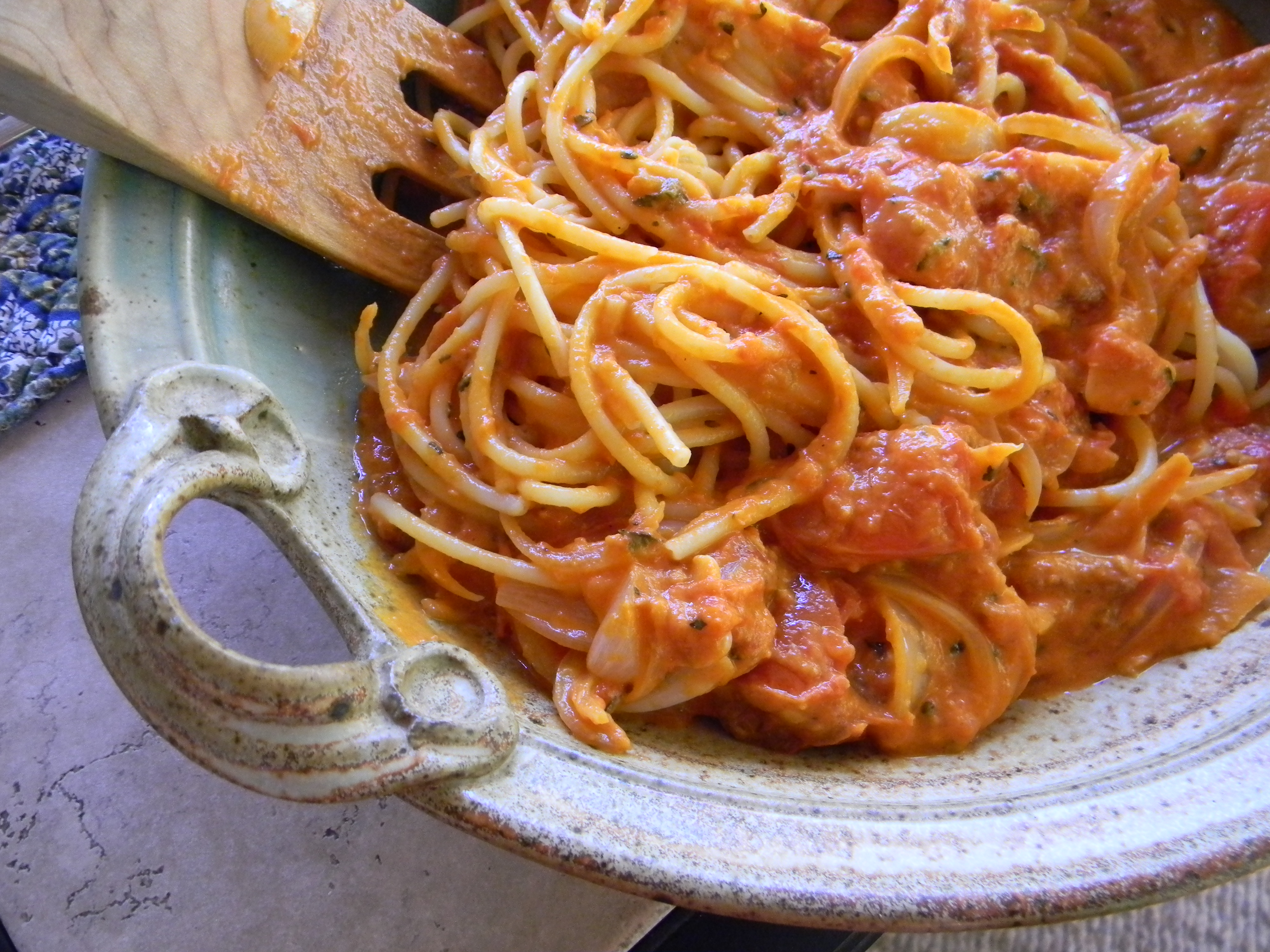
I was smelling something wonderful about 45 minutes later.  This time when the timer went off and I gave it a stir, it was starting to take shape.  I figured one hour more and I would have our sauce. Sure enough, one hour later and voila we had a beautiful sauce. Val and our neighbor Lynne had come in just as I was pulling it out of the oven.  I had originally thought I would can a few quarts of it for winter, when we all decided what we really should be doing is having it for dinner!  I decided to turn it into a Roasted Heirloom Vodka Sauce.  Why not?

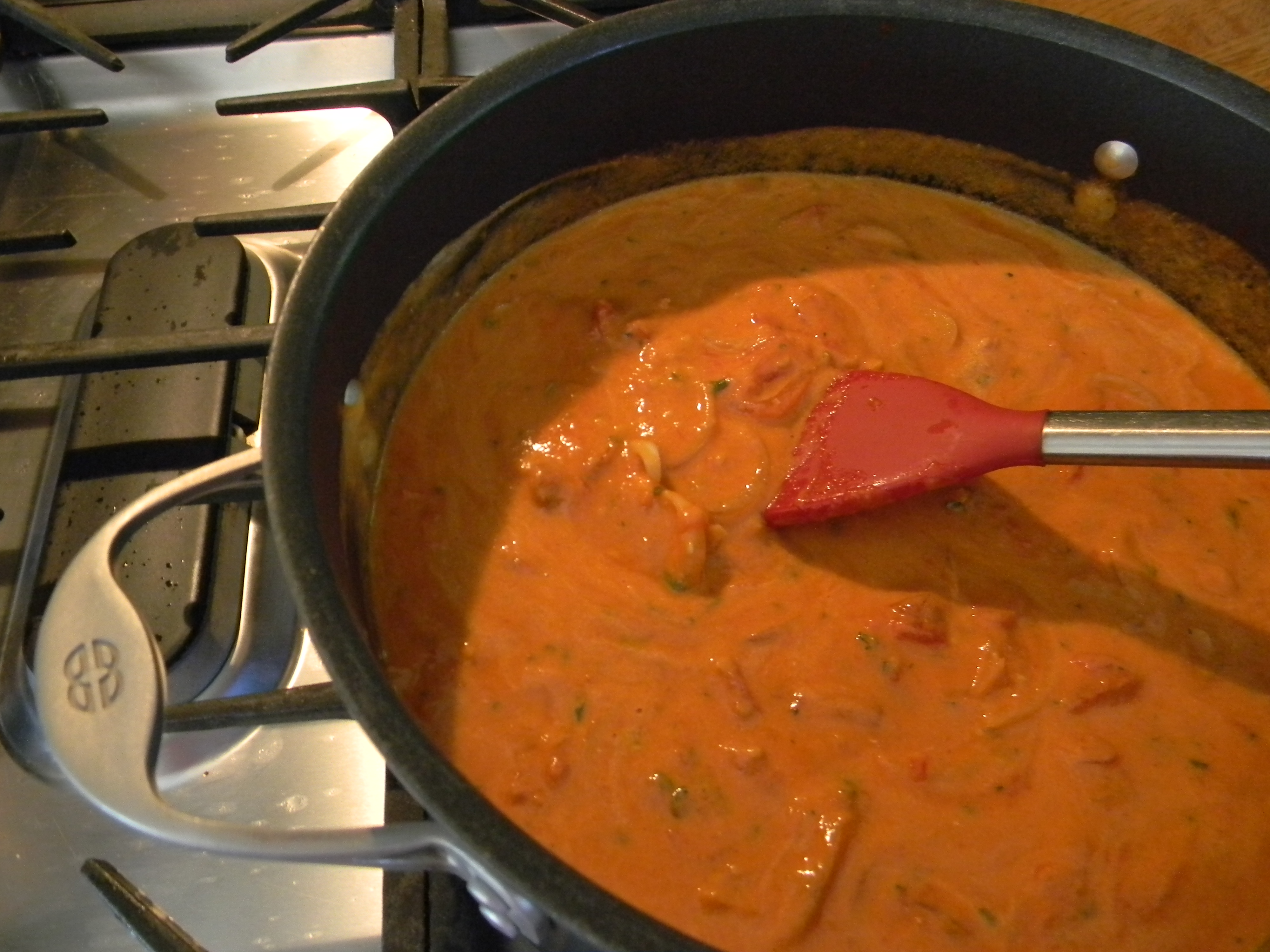
A beautiful creamy sauce!

Roasted Heirloom Vodka Sauce:

  • 5-8 lbs of roasted heirloom tomatoes
  • 1 medium onion, thinly sliced vertically 
  • 3 cloves of garlic, thinly sliced
  • 1 tsp dried basil
  • 1/4 tsp red pepper flakes
  • 1/4 cup vodka
  • 1/2 cup heavy cream
  • Sea salt and freshly ground pepper to taste
  • 8 oz dried pasta of your choice
  1. After roasting your heirloom tomatoes, take half of the mixture and puree it in a blender or food processor until smooth.  Set aside.  Prepare pasta according to package directions.
  2. In a large sauce pan, saute onion in about 1 Tbsp olive oil on medium heat until soft and translucent.  Add garlic, basil, and red pepper flakes; continue cooking for about 3 minutes.
  3. Add vodka and reduce by half.
  4. Add reserved roasted tomatoes and pureed tomatoes.  Heat thoroughly.
  5. Add heavy cream and stir to combine.  Drain pasta and place in pasta bowl.
  6. Top with sauce, then toss to combine.
Serves 4

Well worth the effort!

You will find many uses for roasting tomatoes in quantity.  The sauce can be canned or frozen for future use.  What a great way to chase away those cabin fever blues this winter.

“It is difficult to think of anything but pleasant thoughts while eating a homegrown tomato.”    —Julia Child

Posted in Essays, Raves, Recipes | Tagged , , , , , | 5 Comments