

Just an invitation to those following the Basics with a Twist blog to check out my new blog: twistedbasics.com
I think you’ll find this new direction a good read, super recipes that advocate whole food cooking.
Just an invitation to those following the Basics with a Twist blog to check out my new blog: twistedbasics.com
I think you’ll find this new direction a good read, super recipes that advocate whole food cooking.

Silent snow
2014 was full of surprises, challenges, joys and sorrows. We had a great farm year, in spite of the strange weather, tomato blight and wild animals vying for every crop. We lost our dear German Shepard Ella-Bella, who had been with us for almost 12 years. My dog Bleu still looks for her; she was his mentor and ever present comrade. Val and I celebrated our first legal wedding anniversary, with the ever present hope that the state of Michigan will one day decide to honor that union. And last but certainly not least, I had a medical crisis that upended our lives.
I have loved writing this blog and sharing farm stories and recipes with all of you. It ultimately culminated with my memoir/cookbook Basics with a Twist. When I started this blog in 2011, it was with the willingness to share the one thing all our lives have in abundance: upheaval and change. Although none of us know what the future holds for us, I am still learning to accept it as it unfolds in all its texture and nuance.
Last June, when I had a serious intestinal bleed-out, I realized just how fragile life can be when your health is compromised. With so many questions left unanswered, we had little choice but to become proactive concerning how future episodes of this kind might be prevented. Physicians have protocols and treat symptoms; they rarely make the connection between diet and health.
Food has been our personal and professional focus for over 8 years. We sincerely believed we were eating a healthy diet of grains, dairy, vegetables and meats. We limited our processed foods, made our own bread, prepared most of our meals at home and were more than a little surprised that we were not practicing what our bodies really needed. How could we be so wrong?
I invite you to visit my new blog: Twisted Basics: Rethinking Food. I feel the journey of choosing which of the many suggested paths for health might make a decent read and of course it will be full of new recipes and suggestions. I look forward to seeing you there….
“The secret to change is to focus all you energy,
not on fighting the old, but on building the new.”
Pass the love along!
Today I turn “60”. It’s a day that starts like many days, I shower, pour myself a cup of coffee and walk into our screened-in porch. This first hour has always been my favorite. My wife Val joins me to listen to birds, smell air and plan our day. I take that first sip of coffee, my shadow Bleu lies on my feet so he knows when I’m on to something else.
Today I am filled with gratitude. Today I remember we are given just that….today, this moment. Last Wednesday after feeling extremely weak and fatigued for several weeks, I made a doctor’s appointment and went for a blood test. That night our doctor called to tell us that my hemoglobin count was 5.6. Six months ago it was 13.9. “You need a blood transfusion,” he explained. “Usually anyone below 8 is a candidate. Please go first thing in the morning.”
I was stunned. A blood transfusion? Mmmm, must be serious. We went to the hospital the next morning and were greeted swiftly, by caring staff (thanks to our Dr.’s order). Within 5 minutes I was having a electrocardiogram and was set up with an IV. I was receiving blood within 90 minutes and admitted. I don’t know what I thought; fuel me up and let me go? After 2 days in the hospital, a CAT scan and 4 units of blood I was released with out patient tests all this week. The doctors said, “Do you realize how lucky you are? How serious this was?” No. I didn’t.
What I did realize was I felt overwhelmed by the concern of others. Phone calls exchanged, family and friends notified, we felt supported from the very beginning. Val, besides doing the work of two on our farm, was right there whenever needed without complaint, offering her usual humor and love. The hospital staff couldn’t have been kinder, nor my doctors and nurses more competent. I truly felt in good hands. While I was resting at home, Val went to market on Saturday as scheduled and was welcomed with not only concern for us, but able hands. Vendors helped unload our van and set up; customers came to help behind the counter. Hugs were exchanged, additional help offered and soon a card was circulated and well wishes written for delivery. Small gifts were offered, a quart of perfect Michigan strawberries, Michigan apples, the best granola ever made, baked goods, fresh salsa and bread. When Val returned home that afternoon and delivered the gifts and well wishes, I was totally humbled. I read the card out loud to Val with a trembling voice and tears of joy running down my face. Our farmer’s market was not only a business, but a community of caring people! Love washed over me and I have not been the same since.
We all go through difficult traumatic times, and isn’t the burden always lifted by kindness? What if each of us every day remembered those known and unknown who struggle in their lives and offered what we could. A card, phone call, prayer, a moment of remembrance; I can’t help but feel how much difference it would make not only for the person experiencing hardship but for the heart within each of us. May the circle remain unbroken.
So no matter what the test results may bring, we are buoyed by the concern, prayers and goodwill of others sent our way. It is a powerful drug.
“Love is a fruit in season at all times……”
—–Mother Theresa
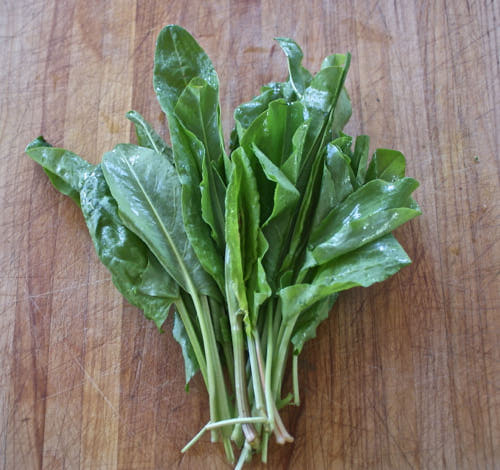
Beautiful spring sorrel
Common sorrel or garden sorrel, is a perennial herb that is cultivated as a garden herb or leaf vegetable. Other names for sorrel include spinach dock and narrow-leaved dock. It is used by many different cultures including Romania, Russia, Ukraine and Hungary to name a few. Sorrel is often paired with spinach.
My mother-in-law introduced me to this perennial by making me sorrel soup. Elsa called it peasant soup, claiming it had healing qualities. She said she used to collect wild sorrel in Estonia for her step-mother. To Latvians, Lithuanians and Estonians, it was a spring staple. Like many things cultural, each cook approached it differently. Some added barley, some oatmeal, many pushed the tartness adding lemon juice. Elsa always served hers with smoked pork chops.
I really enjoyed Elsa’s sorrel soup, yet contemplated a different approach. I loved the tartness of sorrel; how it tasted clean and new, like spring. I also liked the addition of barley, which gave it substance. Sorrel is in the spinach family, but is a more tender green and breaks down completely in the soup. I wanted the sweetness of shallot rather than onion, and some fresh tarragon. The tarragon led to the addition of egg yolk for a silky texture and a bit of fresh lemon juice to keep it bright. Although it ended up completely different from Elsa’s, it reminded me of the Greek lemon-chicken soup, Avgolemeno. Elsa was my inspiration and mentor, spring was my guide.

Assembly
Sorrel Soup
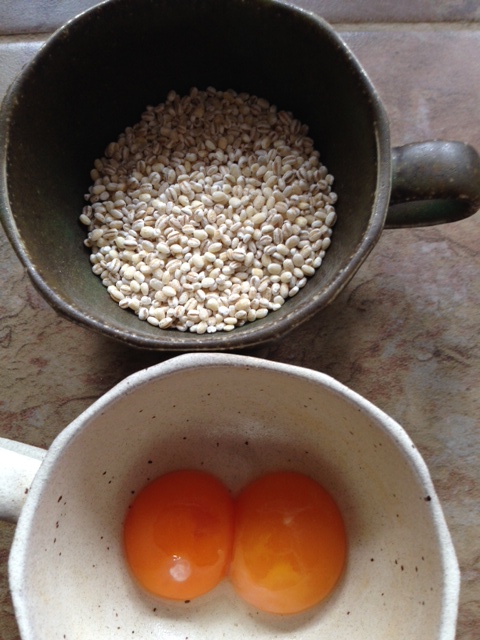
Barley and egg yolks
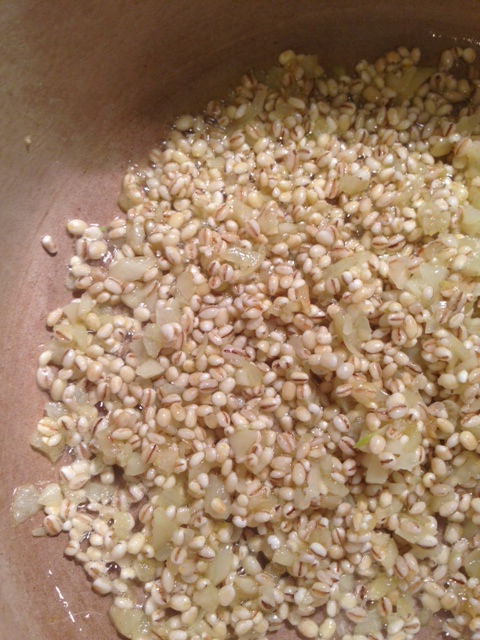
Shallots, garlic and barley
Serve immediately. Yields 4 servings

Rich, yet bright….a joy of spring
” Sorrel soup….you cut the egg into slices, and you eat it with the green soup. And the mixture of the sharp green acidity and round comfort of the egg reminds you of something extraordinary and far away.
Of home?
Certainly not, not even for Poles. Of what then?
……Of survival, perhaps.”

Gorgeous fresh Tuscan kale
I was reading on Facebook the other day that there were some dangers involving eating too much kale. One comment said, “They were so over kale!” I can see the concern if you’re a green smoothie junkie who drinks a quart a day of the stuff. For me however, I will never be over kale. It’s just too plain good to get over!
We typically grow 3 kinds of kale: Winterbor, Red Russian and Tuscan. We enjoy them all, with Tuscan being my favorite. Frankly, it’s loaded with so many goodies that eaten with a bit of moderation, the benefits far outweigh the risks. Kale, also known as borecole, is one of the healthiest vegetables on the planet. A leafy green, kale is available in curly, ornamental, or dinosaur varieties. It belongs to the Brassica family that includes cruciferous vegetables such as cabbage, collards, broccoli, and Brussels sprouts.
One cup of chopped kale contains 33 calories and 9% of the daily value of calcium, 206% of vitamin A, 134% of vitamin C, and a whopping 684% of vitamin K. It is also a good source of minerals copper, potassium, iron, manganese, and phosphorus. Whew….does it get any better than that?
As a vegetable farmer and cook, I’m always looking for different ways to use this powerhouse vegetable. It’s amazingly versatile whether used raw in salads, as a creative side dish, in soups or as I discovered recently in ragout. A ragout is really a stew that contains a hodgepodge of meat, vegetables and spices. They are thick in nature and rich in flavor. While putting this ragout together, I decided to use other favorite foods such as cannellini beans, roasted heirloom tomatoes, which I put up this fall (see blog Waste Not Want Not 9/10/12), and sweet Italian sausage. Don’t be fooled by the the simplicity of this recipe….it’s simply outrageous!
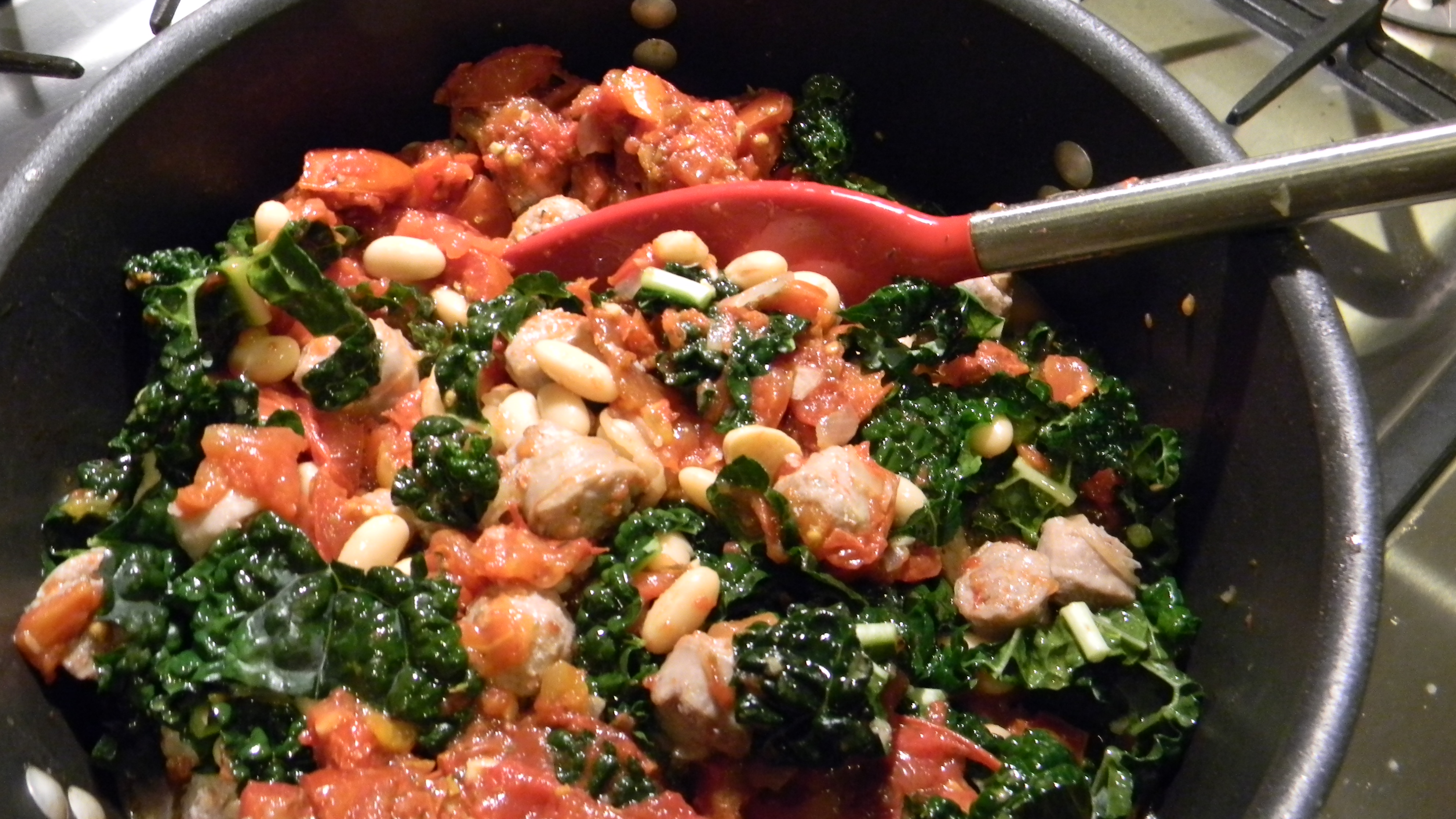
Break out the red wine!
Tuscan Ragout:

Rich and satisfying, great for a quick winter meal.

Is there more?
“Winter is the time for comfort, for good food and warmth, for the touch of a friendly hand and for a talk beside the fire: it is the time for home.”
― Edith Sitwell

I have a confession to make. I love pie. In fact, I could eat one a week if it wasn’t for my waistline. The other part of this confession is although I consider myself an accomplished cook, I have always used a refrigerator crust. You heard right, a processed refrigerator crust! It’s a little embarrassing. I have dragged around my FOC (fear of crust) since 1964 and my first solo attempt in the kitchen. Really, why is it the simplest things can nourish an insecurity of a lifetime?
The genesis of FOC, started when I was ten years old. I wanted to make an apple pie with a homemade crust. My parents were having guests for dinner; I wanted to provide the dessert. My labor of love took all afternoon. Somehow when measuring out the ingredients, I had put one tablespoon of salt rather than one teaspoon in the crust. Although the pie looked pretty good for a rookie, it was virtually uneatable. When I woke up the next morning my mother told me that Mr. Dodge had eaten a whole piece of pie. He also consumed an alarming amount of water afterward. My fragile ego could not deal with being the brunt of endless jokes. I tucked away this small failure and never spoke of it again. FOC blossomed into a complete neurosis about crust and baking in general. I was a cook, not a baker. Over time I reasoned that a purchased crust was simply a time-saving measure.
The kitchen has always been my favorite part of my home. It is my passion, my therapy and a reflection of my livelihood as a vegetable farmer. Why was I still carrying this FOC around? So…I promised myself that I would master two things that I was reluctant to try. 1) Make a decent pie crust and 2) Learn the art of pan frying fish (more on this later). I mean really….how hard can it be?
To that end, I researched two approaches. It seems that you are either a food-processor type, or a traditionalist. Although I use my food-processor for many things, I decided that in this case, I would follow tradition and use a pastry cutter. The next step was to just do it!
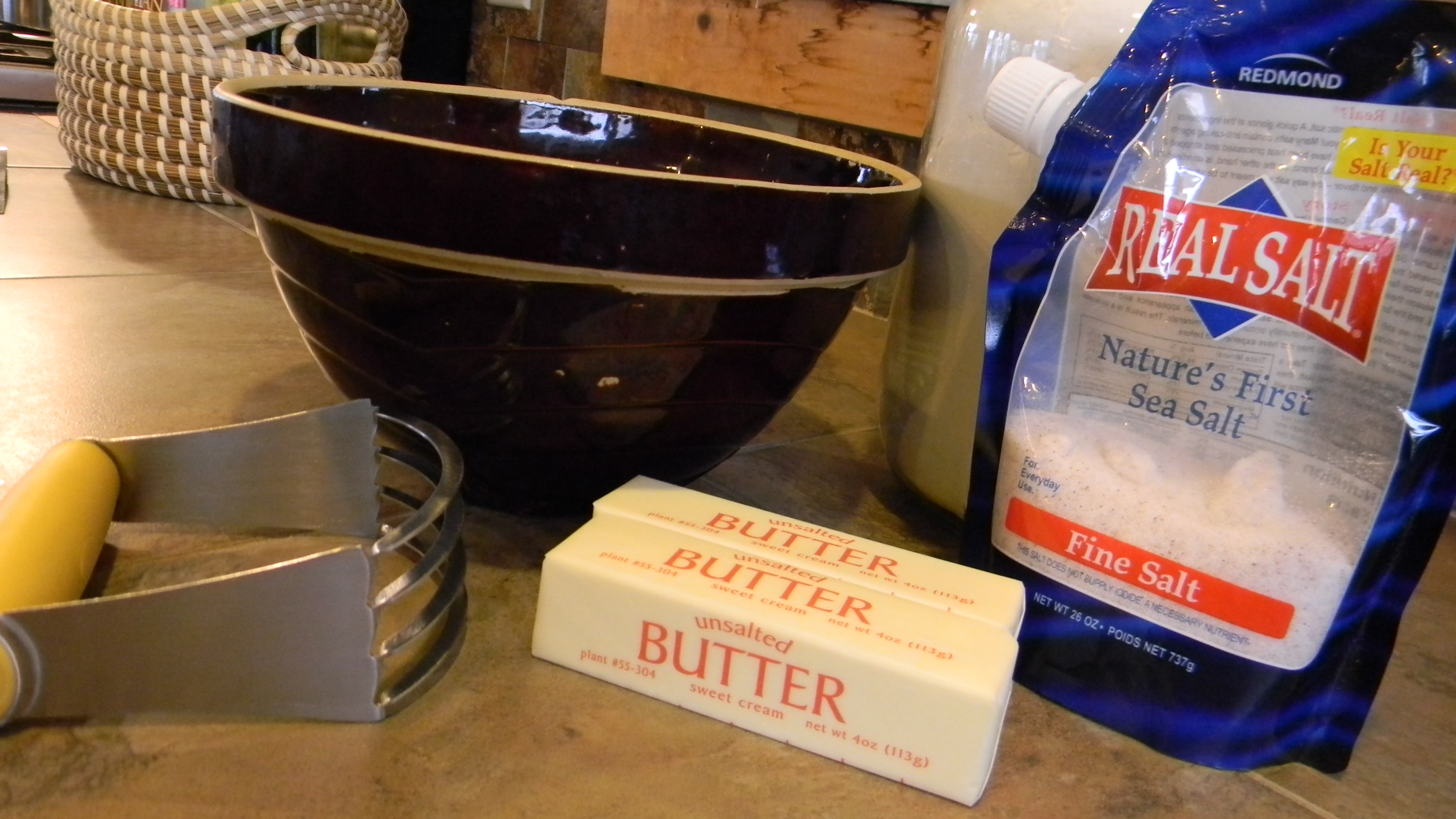
Assembling the ingredients.
What I really learned in researching pie crust, was that it’s really all about temperature. Both the butter and your water need to be cold. Very cold. If things warm up while you are cutting the butter into the flour, then chill it down for 15 minutes before you add your ice water. You want to keep those small pockets of butter intact. That’s what gives you the flaky crust we are all looking for.

Preparing to cut in the butter with my pastry cutter.
For the crust:
While you are waiting for your crust to chill, prepare your filling. In this case, rather than using a pie plate, I want to do a rustic style pie, which is more free-form, with less filling.
For the filling:
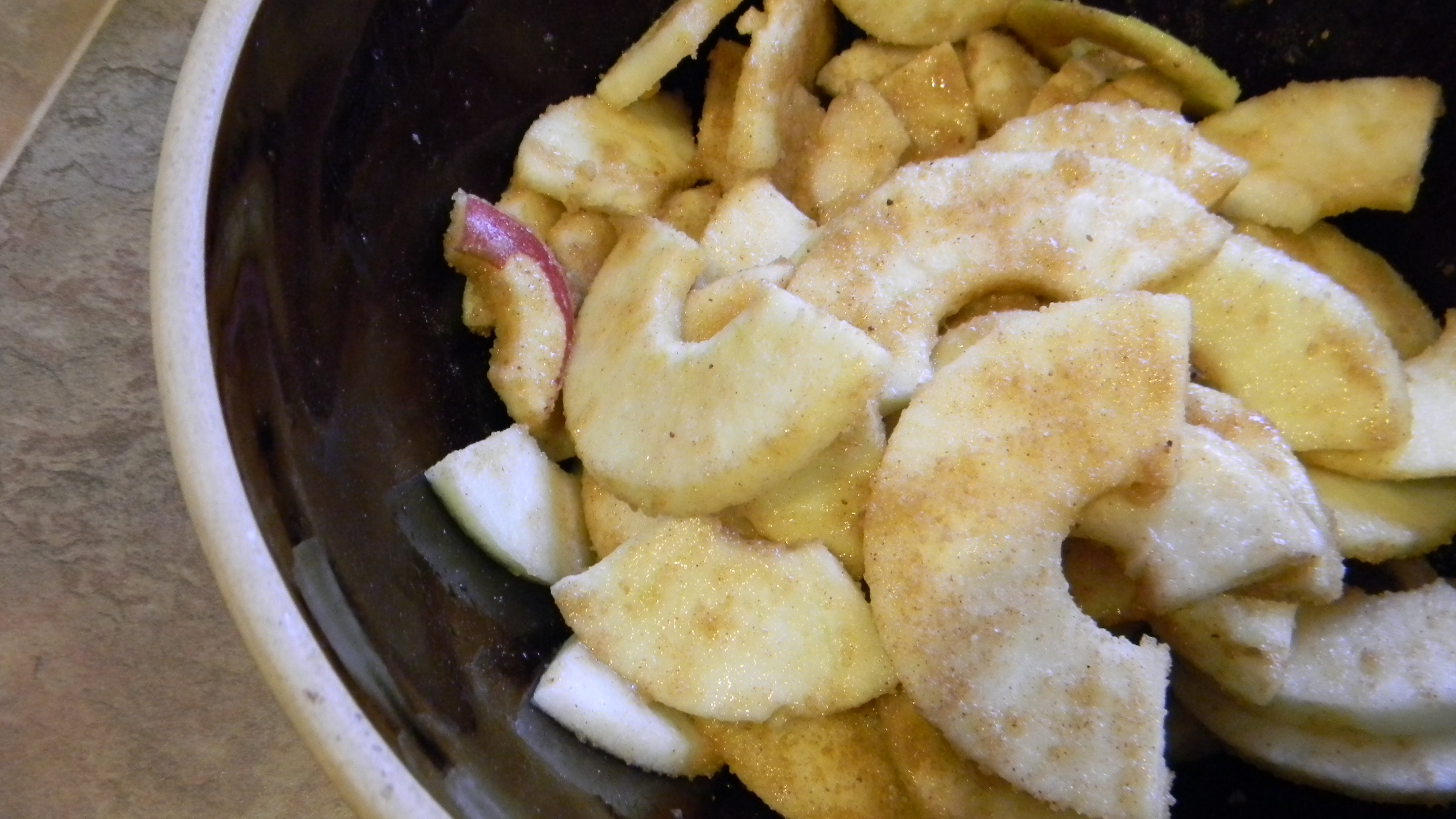
Prepared filling ready to go.
To roll out crust preheat oven to 375 degrees:
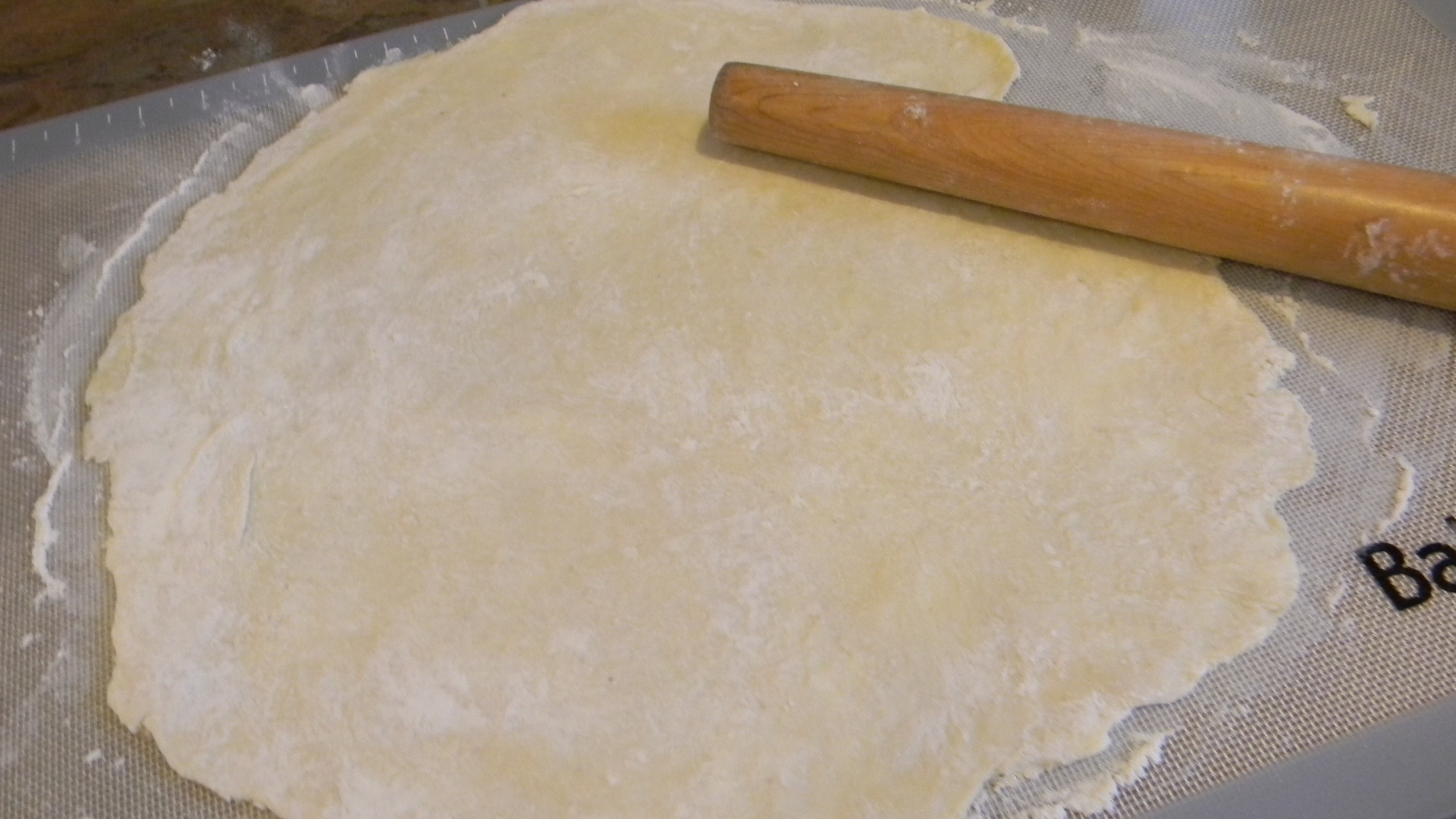
My crust rolled out and ready to fill.
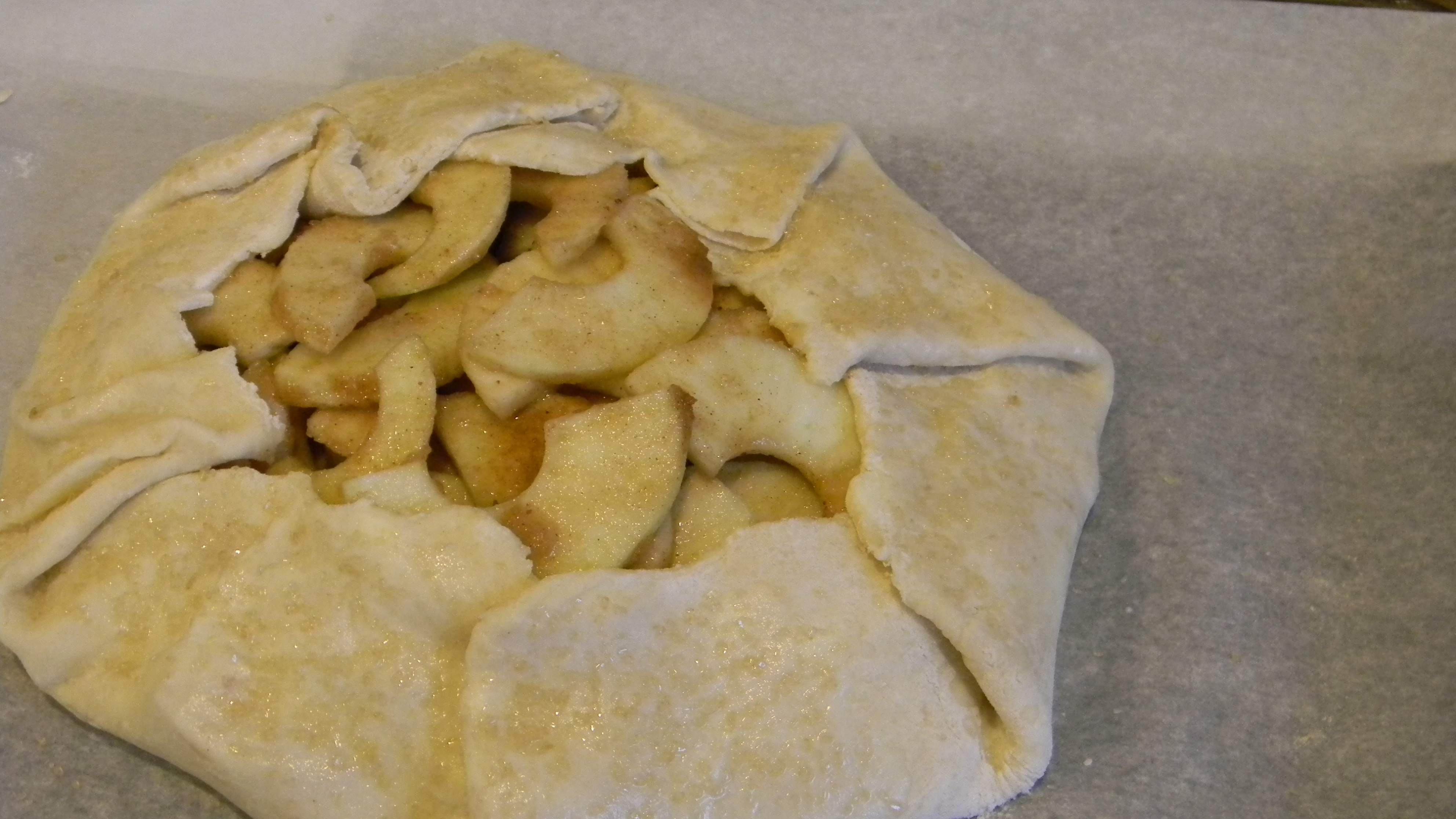
My rustic pie ready for the oven.

Ta, da!
Ok….how easy was that? Just think of all those delicious pies and tarts ahead of me. I can’t wait to tackle all of them! Val has offered to be the official taste-tester.
“When I walk into my kitchen today, I am not alone. Whether we know it or not, none of us is. We bring fathers and mothers and kitchen tables, and every meal we have ever eaten. Food is never just food. It’s also a way of getting at something else; who we are, who we have been, and who we want to be.”
–Molly Wizenberg
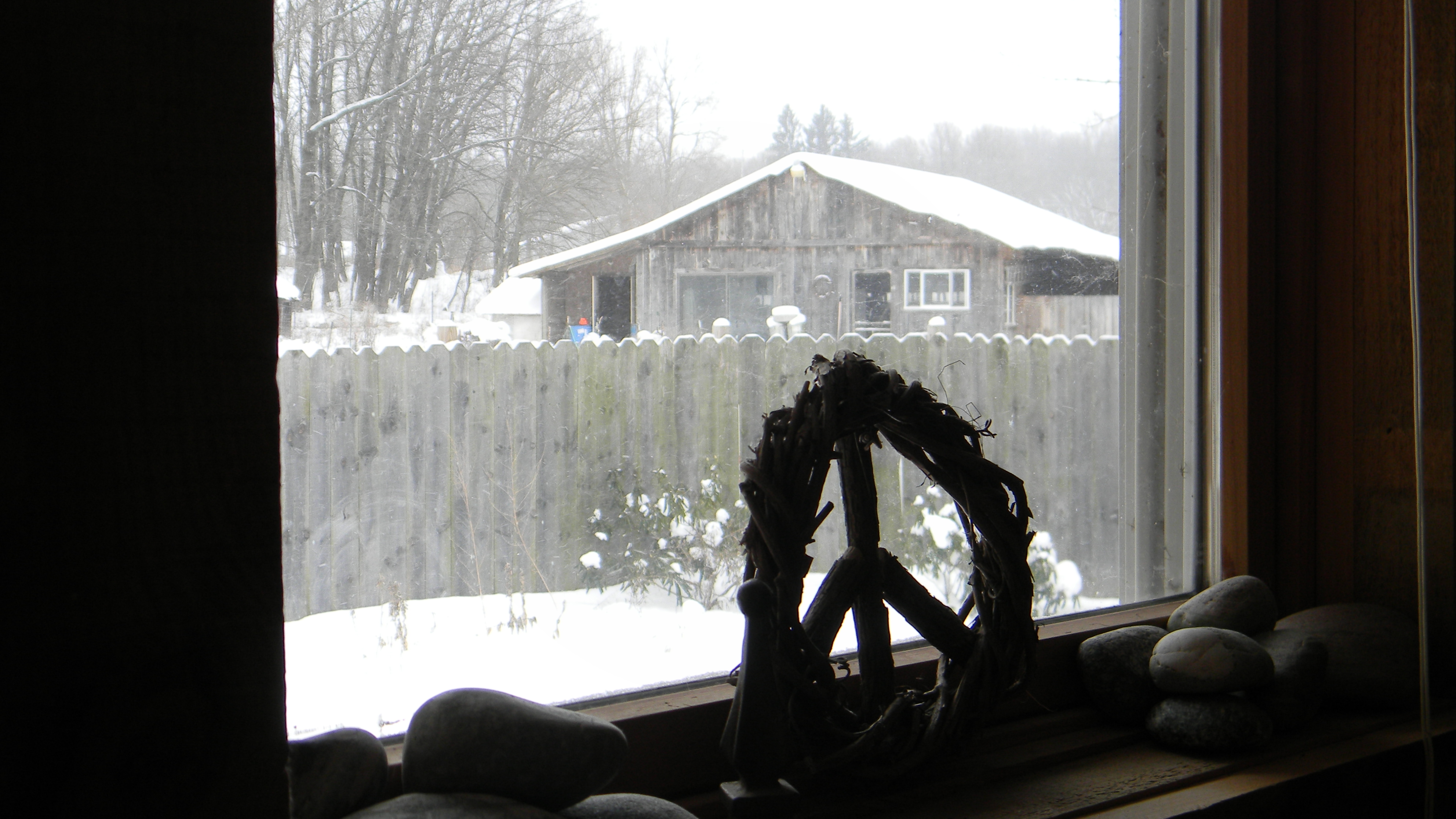
The view out my study
We spent the day putting away all the Christmas decorations in the natural light while it was available. We are completing day eight of our holiday power outage. We have been without power since last Friday, due to a storm that left ¾ of an inch of ice on everything in its path. Life has ground to a slow frozen halt, except for the sound of branches and trees breaking from the weight of the ice, falling across lawns, driveways and streets, taking the power lines with them. What started out as an inconvenience has blossomed into a slightly tedious endurance test. We joke about being ‘pioneers’ although we are sitting better than most. Since we heat with wood, we are warm and can cook on our gas stove.
Normally, it wouldn’t have occurred to me to feel inconvenienced in any meaningful way, except this was the holiday. Plans had been made, food purchased and company poised to arrive. This was not what we expected or wanted! We love pulling out all the stops for the occasion, with plenty of food and drink for family and friends. It’s a main event, something not to miss and my nose was out of joint. I had planned to roast leg of lamb, stuffed with garlic and herbs, accompanied by a Provence casserole made with caramelized onions, zucchini and tomatoes topped with Gruyere cheese. Did I mention the Swiss chard gratin with pancetta, cream and garlic, the kale Caesar salad or the curry carrot soup? Last but not least, the warm apple crisp with homemade ice cream? @#^%!
What? Did I hear you say this is not about me? Perhaps you’re right. When it comes to food, humility is not one of my strong suits. I do so enjoy putting on the Ritz for the holidays. Cooking for others is my bliss so to speak. When I realized that it was unlikely that we would have our electricity back for Christmas, I called my brother to say I was sorry, but I was cancelling our gathering. We were out of power and couldn’t do our traditional spread; maybe next week, possibly on New Year’s Day? I turned off my cell phone to preserve what power I had left and stared at the house bereft of Christmas lights, music and general cheer. Then I did what I usually do to improve my mood…cook.
I went in the kitchen and assembled ingredients for chili. Ground pork, chorizo, poblano peppers, onions, garlic, tomatoes and corn that had been put up in summer was retrieved from the freezer. I pulled dark red kidney beans and tomato paste from the pantry and started chopping, sautéing and seasoning. What started out as a distraction from my disappointment, turned into a huge pot of simmering chili. Then it hit me. Maybe we could just have chili and still get together for Christmas? Why was I so insistent that it be our usual huge spread? Could it be that I was seriously missing the point?
I called my brother back to see what he thought about having chili. He said it would be fine and so much easier than rescheduling everyone. I ended the call feeling relieved and knowing in my heart that getting together was the right thing to do.
Each year we share a Christmas tree with our neighbor Lynne due to our ridiculous collection of cats. On Christmas day everyone arrived as usual with plenty of holiday spirit and cheer. We had carted over chili, cheese and salami, along with beer, wine and gifts earlier. Lynne fired up her generator and lit up the tree to provide the additional ambiance. My brother’s girlfriend Deb supplied corn muffins and a homemade coconut cream pie. After taking our time opening our gifts, we sat down to steaming bowls of chili and conversation. My nephew Ian said, “You know it’s not what we have to eat that so important, it’s the getting together. Christmas wouldn’t be the same without that.” That’s when I realized the greatest gift of all couldn’t be purchased. Over those steaming bowls of chili, we were rich in the love with have for each other. The true meaning for the season was shared in the glow passing through each of us.

Cold without but warm within!
“Home wasn’t a set house, or a single town on a map. It was wherever the people who loved you were, whenever you were together. Not a place, but a moment, and then another, building on each other like bricks to create a solid shelter that you take with you for your entire life, wherever you may go.”
― Sarah Dessen
The view out my study
We woke this morning to a silent blanket of snow, covering every possible twig and shrub with the lightest form of silence imaginable. Emma, curled up at the end of our bed purred in contentment. Our home was absolutely still and the beauty breath taking. Val, my every-ready bunny, slid out of bed to make coffee and rekindle the wood-burner. I could hear her in our kitchen, each sound magnified in its singular presence. Coffee and wood smoke intermingled, and within minutes I was handed a steaming cup of our morning elixir. Climbing back in, neither of us had spoken a word; to do so would have broken some kind of spell. Before long, three cats and a our dog Bleu were also nourished, as we grew quieter still; letting the silence enfold us. This silence is never felt as a void, but as a sound of something moving deep within us; as it formulates our speech.

A sleeping beauty
Silence is a major part of our winter environment. Neither Val nor I are television watchers, so we spend many hours together in its embrace, often reading. The sounds within our home are notes within our daily rhythms. This silence is valued by both of us as we are replenished and nourished by it. We are fortunate to have many windows that open to the natural world outside. In winter we are safe and cocooned, fundamentally sheltered from the storm. It appears that silence and simplicity are an acquired taste. It seems mankind instinctively complicates life.
We are Facebooked, YouTubed, plugged in and turned on; yet why this need for constant business? Haven’t you ever wanted to notice the wind blow, your heart beat or your lover sigh? How can any of it be heard when the world is so noisy? When I stare at a fire and can hear the sizzle and pop of the wood; it would all be missed if the room was filled with perpetual distraction. I say this to you so you might stop and take the time to hear the sounds of silence. Something you enter into; when all we can do is make noise.
During this time of the year, Val and I are often found in the kitchen making a soup, stew or baked good. One of our favorite’s is a carrot loaf that is beautifully dense, yet not too sweet. We love it with our morning coffee.

Val adds shredded carrots to the mix.
Carrot Bread
Wet ingredients:
Dry ingredients:
Additionally:

Sift dry ingredients twice.
Generously butter 2 loaf pans. Divide batter between the two and bake at 350 degrees for 50 minutes, or until toothpick comes out clean.
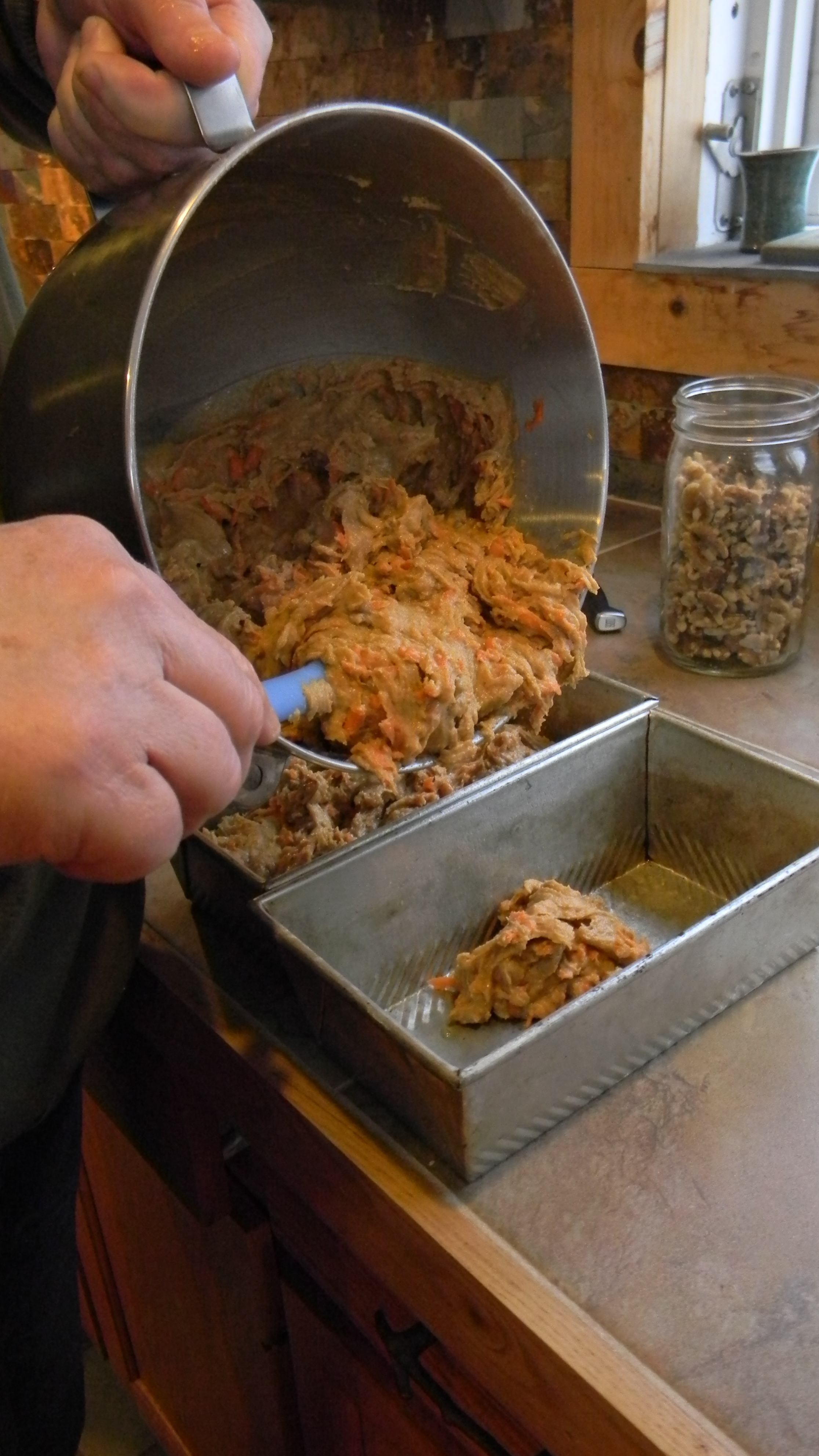
Almost ready for oven.
When done, cool 10 minutes in the pan, then remove to finish cooling. Serve with butter or cream cheese. (We think cream cheese brings out the flavor of the allspice.) Also consider toasting the slices; it’s delicious!
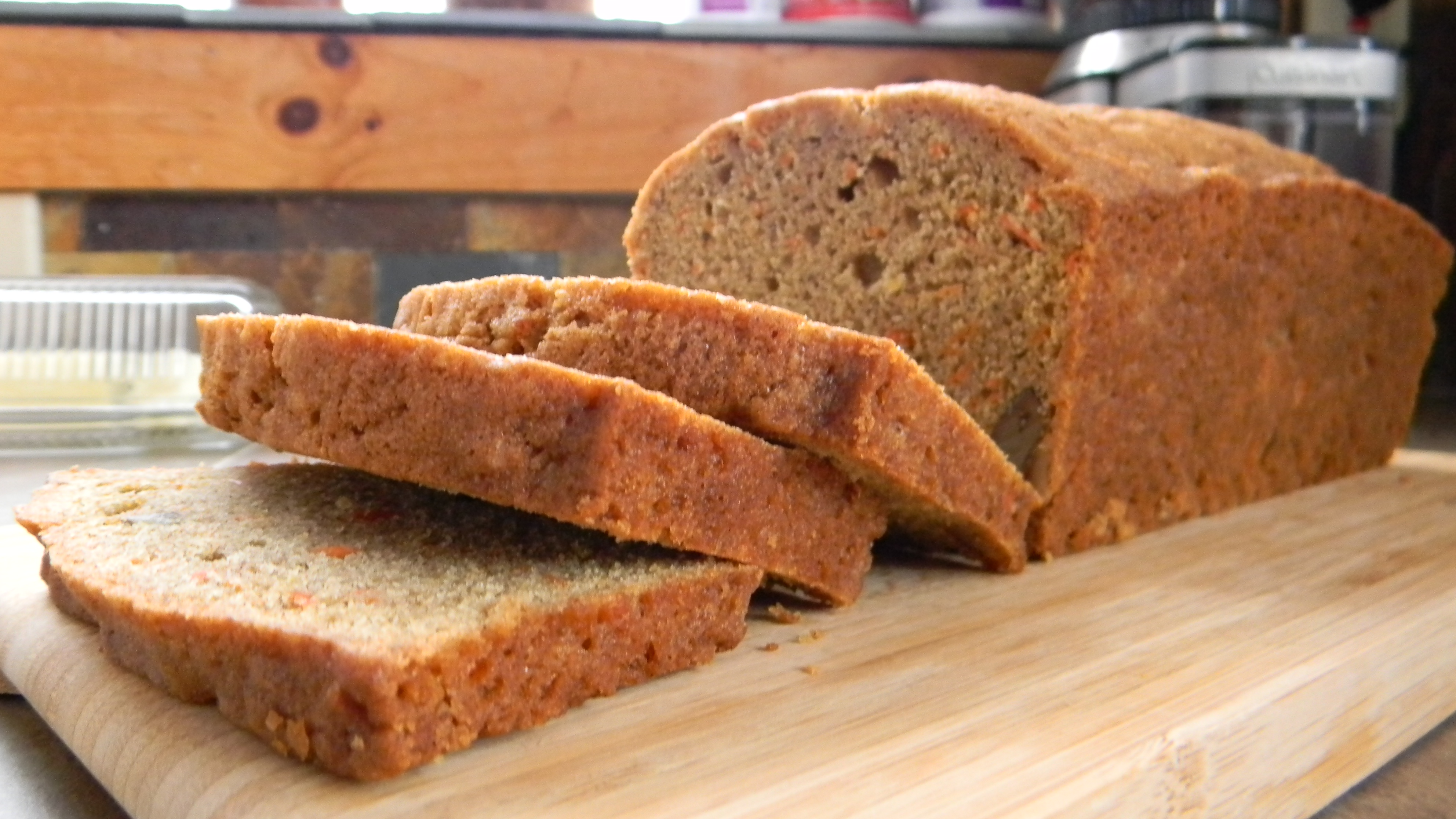
Coffee’s brewing!
“Then silence happened;/the silence that is born of water, foaming,/Suddenly it curdles in a looking glass./ So we grow quiet./ We do the same as lakes to see the sky.”
–Rosario Castellanos
Barely into January, and here we are, catalogs spread over our kitchen table; with lists of vegetables and dreams in hand. At the beginning of each year, Val and I decide on what we want to plant for the next farm season. These decisions must be made early since the availability of choice seed is awarded only to those organized enough to order early.
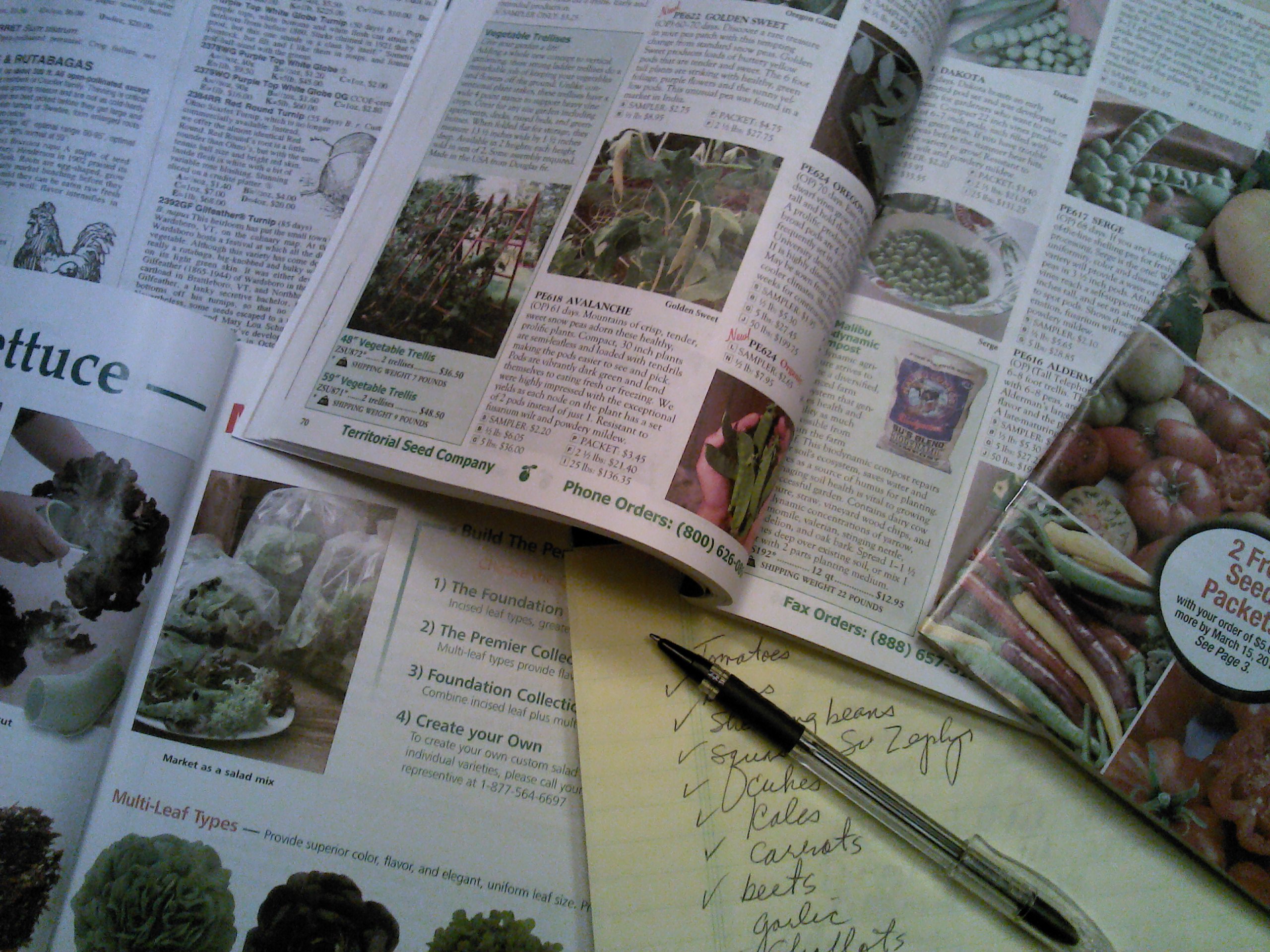
So many choices
We grow many of the same crops each year, but even within those crops we must decide whether or not to change the varieties grown. The weather over the past several years has been unpredictable; we have come to recognize that we really have two separate farm seasons. Spring is starting sooner than ever, and fall is lasting later in the year. Our irrigation protects us from drought, but we are still dealing with extreme temperature shifts. Since we use succession planting methods for many of our crops, its incredibly important to think through how to adapt to the change in weather patterns.
When we sit down with all our catalogs to discuss what new crops we might consider, it doesn’t take long for our heads to start spinning with all the glossy photos. We call it vegetable porn. Did I mention we aren’t getting any younger? So we are starting to scale back slightly on some of our more labor intensive crops, like potatoes. It’s always a balancing act between the weather, crops, weeds, our stamina and market interest. We are very selective about introducing new vegetables at market. The choices we make directly impact our income. Many stalls compete for each customer’s food dollar. We place a premium on the relationships we have built and the quality produce we bring. We count on, and are grateful for our faithful customers that support us each week. We take great pleasure in helping to educate them about our different varieties and how to use them in exciting ways.
We will be working on our seed order for several days, dividing our time between splitting wood, making soaps and seeing dear friends. Winter is such a great time for reflection and balance after a busy market season; soups and stews make an appearance once or twice a week. Here’s one of our current favorites.
Sausage, Fennel and Potato Chowder
Serves 4
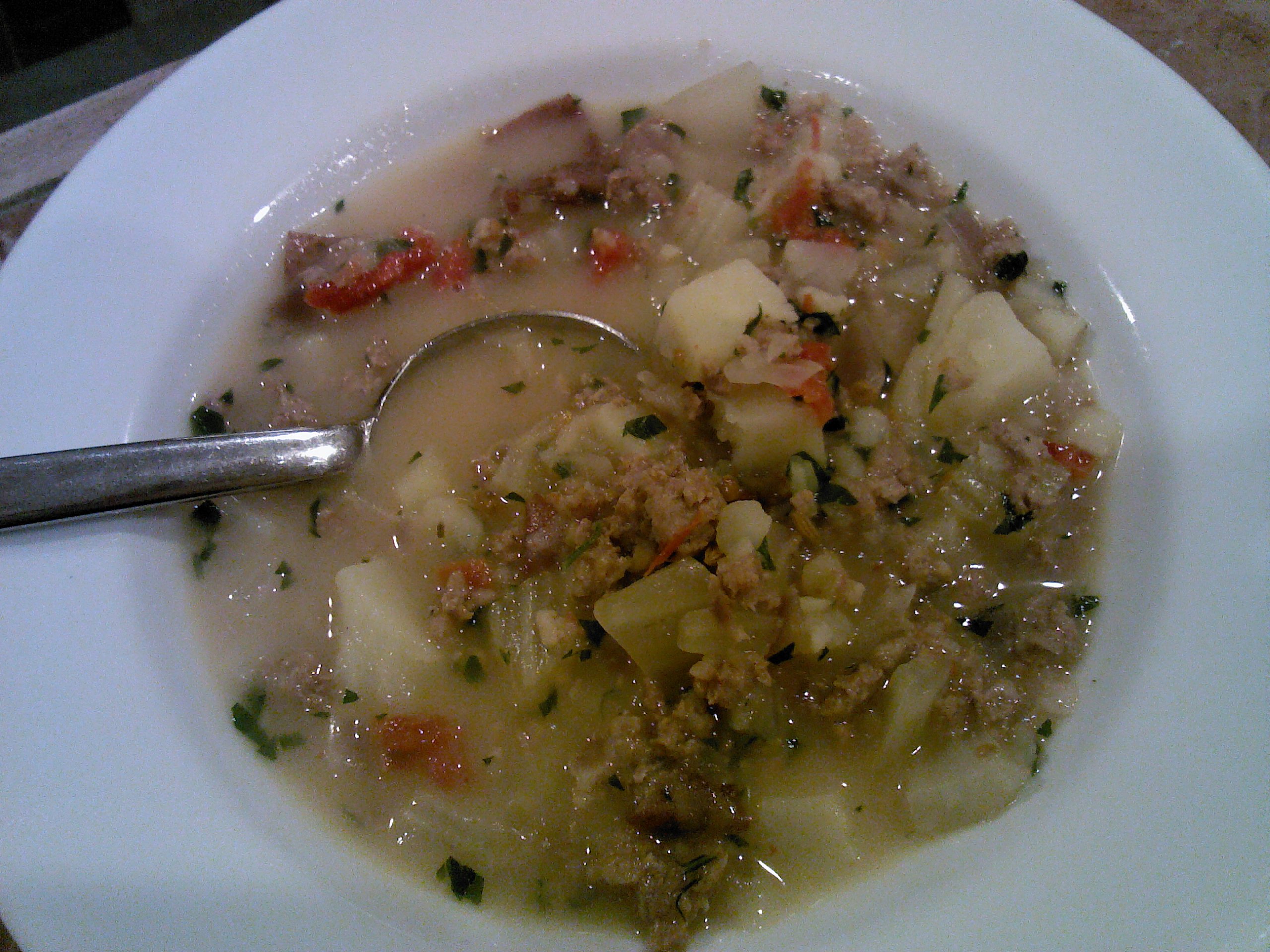
Satisfying and warming chowder
“There is nothing like soup. It is by nature eccentric; no two are every alike, unless of course you get your soup in a can.” –Laurie Colwin
It never ceases to amaze me how life will soften our hearts when we let it. The son of a dear friend of mine called to share that his mother had been taken to the hospital and had gone through two back surgeries, one day apart. This alone would be news worthy, but Marian is 89 years old.
I have known Marian for 30 years; we met when I was dating her son. When my relationship with her son ended, Marian and I maintained our friendship. Marian comes from ‘good basic farm stock’. She is a no-nonsense woman, with a fierce devotion to family, nature, the land and her friendships. Modernity is suspect for a woman, like Marian. For me, Marian has been a surrogate mother in the most tender sense of the word.
I remember each time I would leave her home after a visit. Marian would stand in her living room window and wave to me. I came to look for her in that window, her warmth passing the space between us, waving me home.
Marian takes a deep interest in those she loves. She wants to know what you’re doing, and how you’re doing it. Through relationship failures and life-style changes, Marian was steadfast in her support for me. It is a quality of kindness difficult to repay, and deeply treasured.
Val and I visited Marian in the hospital two days ago and were surprised how well she looked. Her color was good, in spite of the feeding tube down her nose, and the inability to get out of bed. When I asked how she was doing, she responded, “I’m grateful for two things; I still have my eyes and my mind.”
People look vulnerable when they’re in the hospital. It speaks to our own vulnerability. I was reminded once again how each day is precious and unique. We are guaranteed this moment only, our future indeed unknowable. Dwelling on past transgressions or worrying about our future, is so often counter-productive. Our task is to cherish this moment, and use it wisely.
Marian will be transferred to a nursing-home to recover from her surgeries. We all want her to be her usual independent-self and recover fully. Yet we also acknowledge we are not in control of how each life unfolds. I do know I will show her as much love as I can, with repeated visits and well wishes. Although I’m sure she knows it already, I will be sure to tell her, “I love you.”
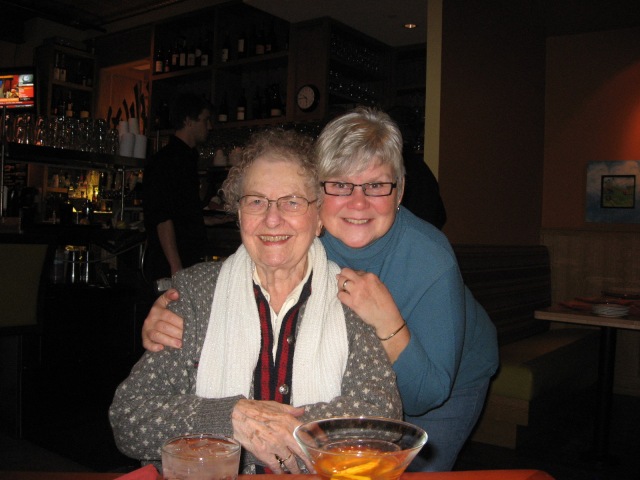
My dear friend Marian
“Friendship is the bread of the heart.” –Mary Russel Mitford
For me one of the simplest gestures to show people how much I love them, is to cook for them. During the colder months, comfort food will show up repeatedly in our home. Here is one of our favorites:
Chicken Potpie
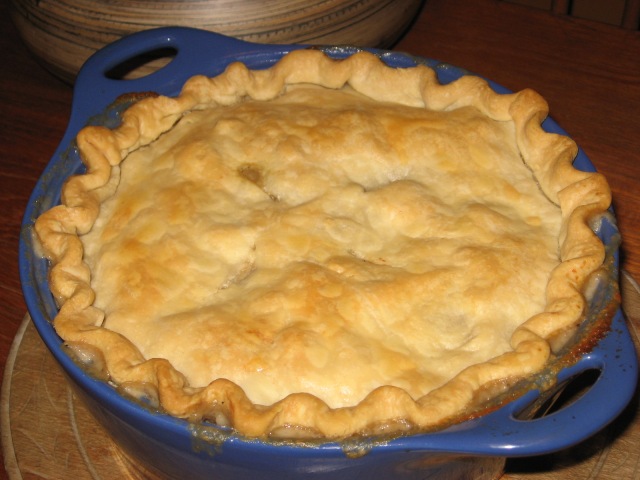
Golden and delicious comfort food
 Basics with a Twist