Stirring Up Delicious

This week we have been pulled to be outside for a few days as the weather was so beautiful it was impossible for us to be downstairs in our soap kitchen.  (it was 70 on Tuesday!) We have been itching to start our next farm season and to that end we have cleaned out our greenhouse so it’s ready to go when we start planting on April 1st.  We had trouble with our roosters picking on our ducks this winter and had used it as a temporary pen for our African goose and 6 ducks.  The floor was going to yield some great compost material!  It has also been a difficult week in lieu of the events in Japan and Libya.  At times the world is such a troubled place.  After donating to Habitat for Humanity for aid in Japan, I realize how very fortunate we are to have a simple life of growing food and making soaps.  When things fall apart it gets down to basics: food, shelter, clean water.

During times like these I find that certain foods are indeed comforting.  Although you can’t beat a perfect grilled cheese sandwich, I wanted something in a bowl.  I settled on Porcini Mushroom Risotto.  There is something about the earthy depth of this dish that strikes just the right chord for me.  It is also a great way to use that roasted chicken stock you may have made from the roasted chicken recipe a few weeks before.  I like to finish it with frozen peas as their bright green color looks wonderful against the caramel color of the finished risotto.  If you love mushrooms this is the dish for you.  Although you can use your garden variety button mushrooms, I prefer the brown cremini; they go perfectly with the porcini’s.  Cooking the dried porcini’s in the roasted chicken broth takes your broth to another level completely.
Mushroom Risotto

  • 5  3/4 cups roasted chicken stock (alternatively you can use commercial chicken broth)
  • 1/2 oz dried porcini mushrooms
  • 1/4 cup (1/2 stick) unsalted butter
  • 2 cups onion, chopped
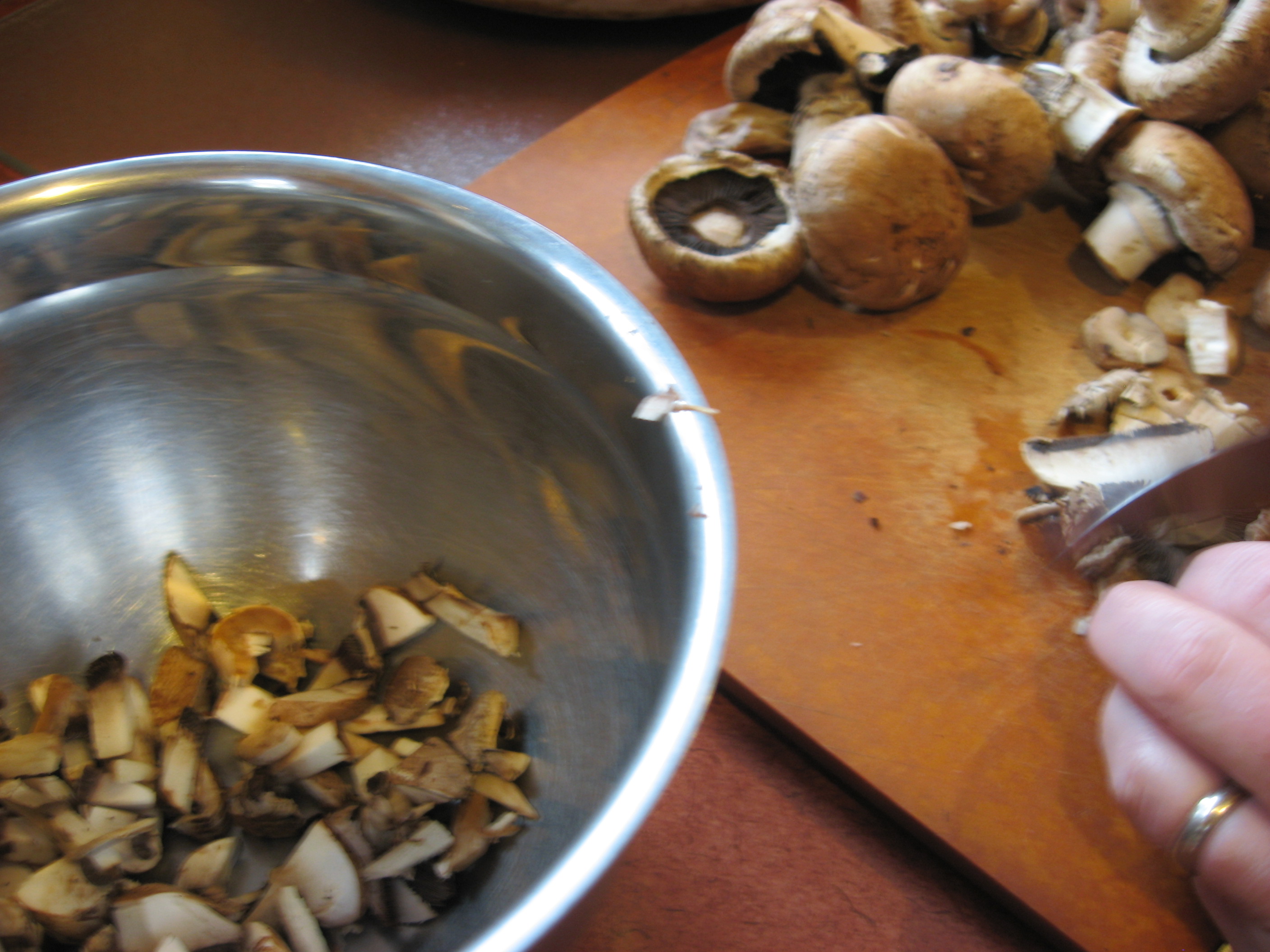
  • 10 oz fresh cremini mushrooms, chopped finely
  • 4 garlic cloves, minced
  • 1 1/2 cups Arborio rice
  • 2/3 cups dry white vermouth
  • 2/3 cups freshly grated Pecorino cheese
  • 2/3 cups frozen peas, thawed
  • Kosher salt and freshly ground pepper to taste
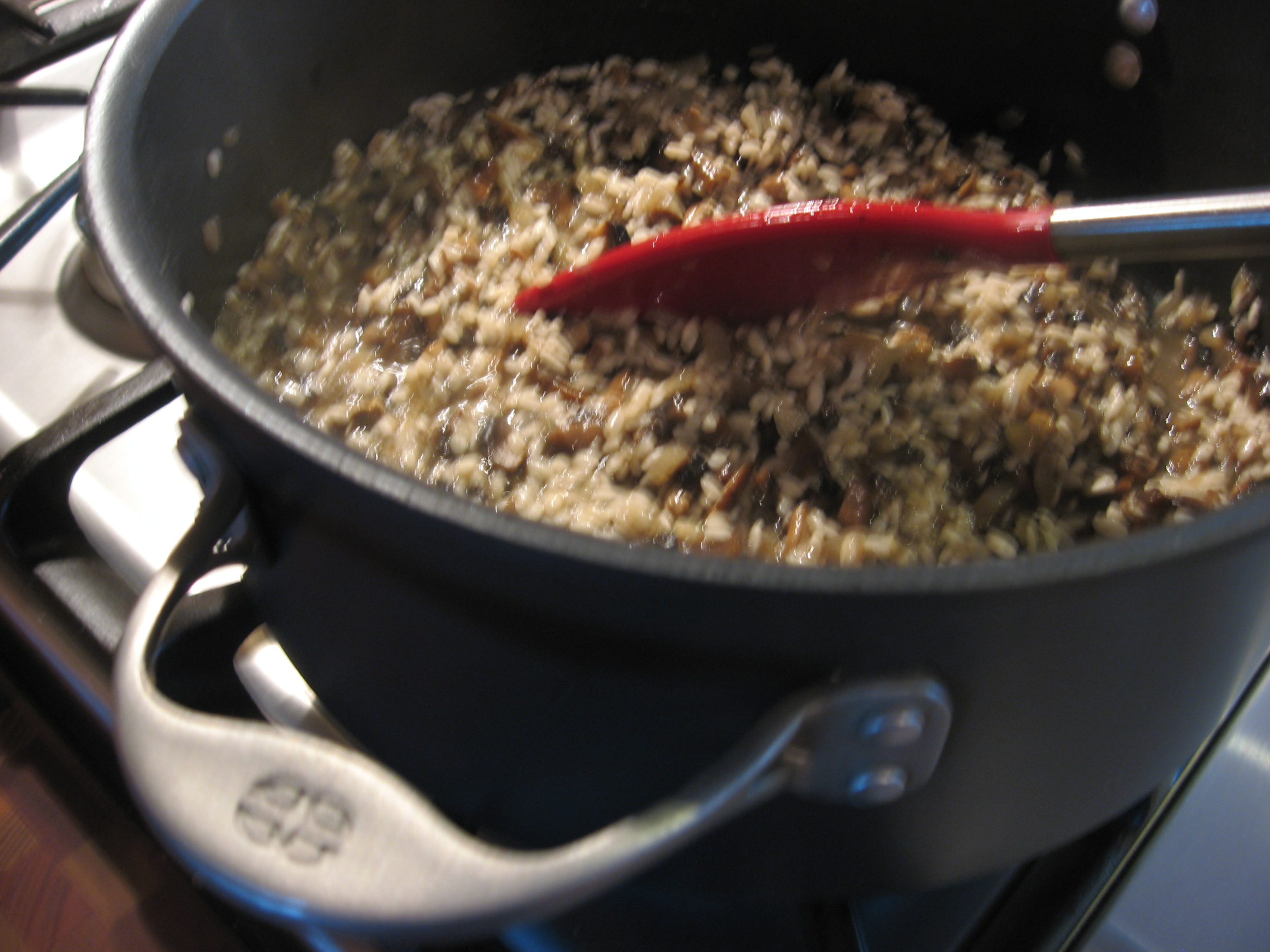
  1. In a large saucepan bring the roasted chicken stock to a simmer.  Add the dried porcini mushrooms to stock, cover and simmer for 5 minutes.  Remove the mushrooms with a slotted spoon and chop, then reserve.  Continue to keep the stock on a low simmer.
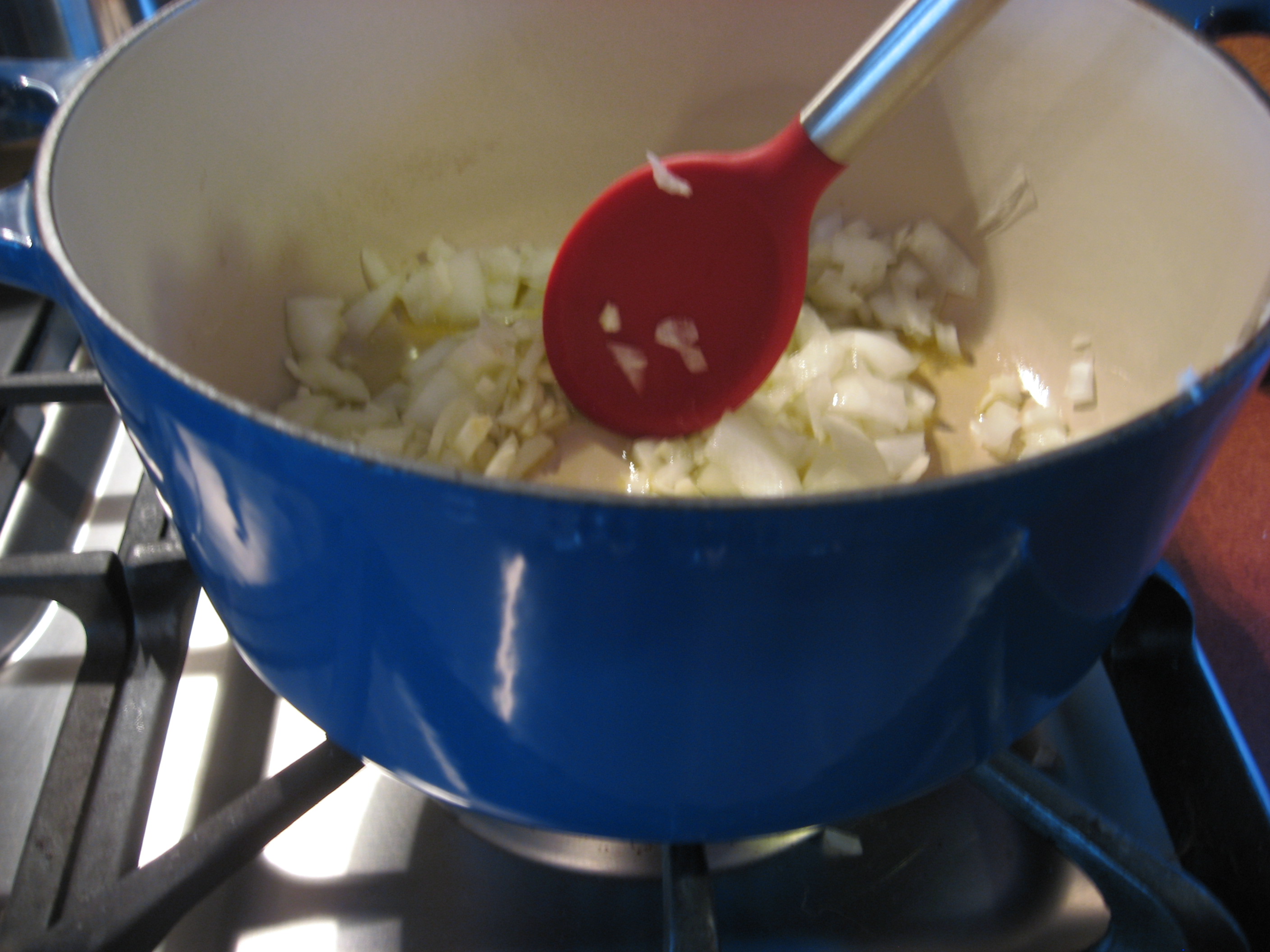
  2. Melt the butter in a large heavy saucepan over medium heat.  Add the onions and saute until soft, about 8 minutes.  Add the fresh mushrooms, the reserved porcini’s and the garlic.  Saute until the mushrooms are tender and the juices evaporate, about 10 minutes.
  3. Stir in the rice, then add the vermouth, stirring continually until the liquid is absorbed, about 3 minutes.  Add 1 cup of stock and simmer over medium-low heat.  Stir often until the liquid is absorbed.  Add 1 cup of stock each time and repeat until all the stock is used and the mixture is creamy.
  4. Add the Pecorino and thawed peas, stirring until cheese melts and peas are heated through, but still bright green, about 2 minutes.  Add salt and pepper to taste.
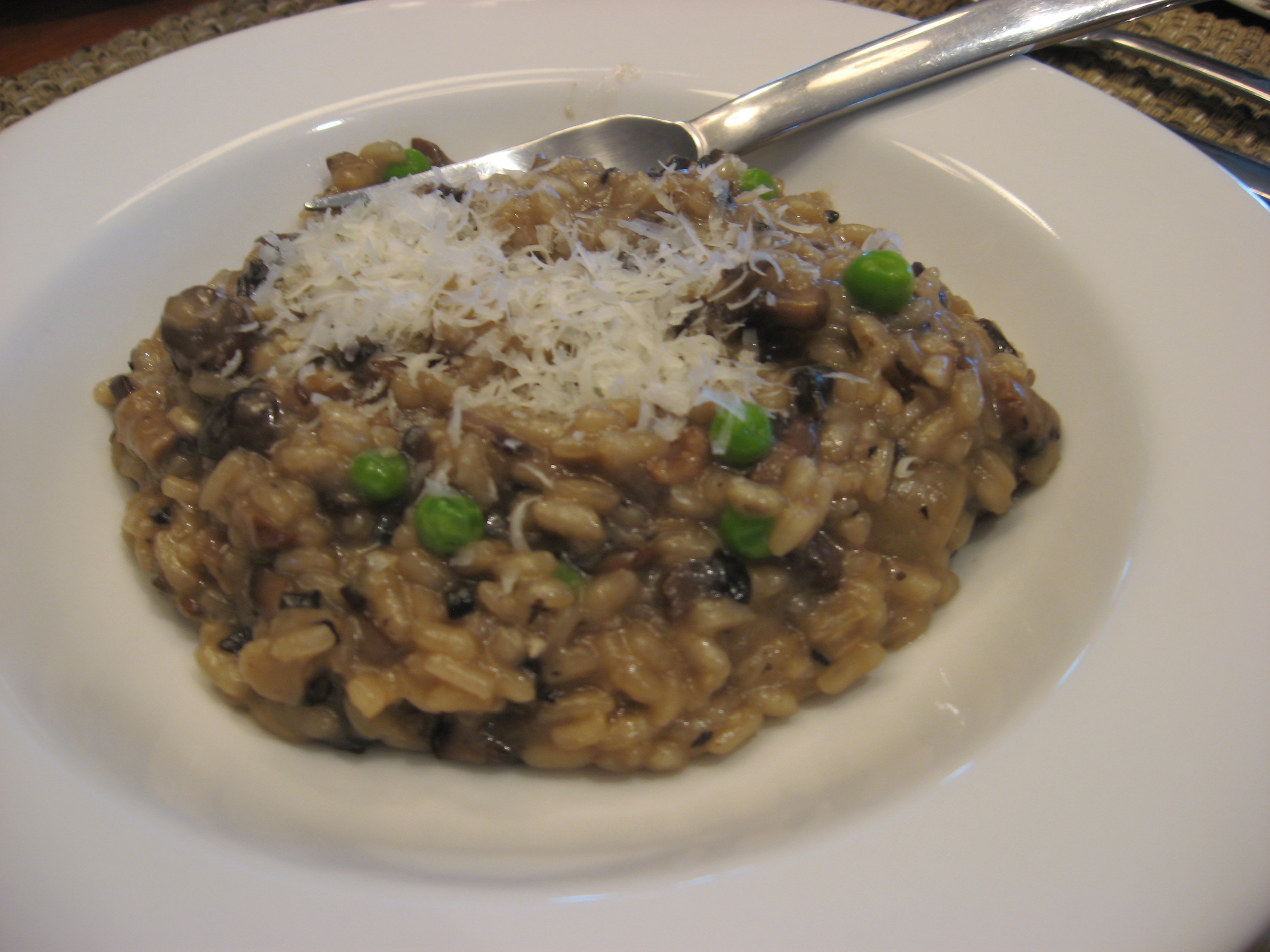
Spoon into bowls and pass additional freshly grated Pecorino cheese.  Light candles, pour wine, put on some nice classical or jazz and give thanks for your safety and comfort.

“You can do no great things, only small things with great love.”

–Mother Teresa

Posted in Farm News, Recipes | Tagged , , , , , | 2 Comments

Full: When Minestrone is Enough

Val and I are finally on the mend from the flu and decided it was time to make something more nourishing for ourselves than simple broth and plain toast.  Although we are not done with winter, the earth is starting to thaw and smell more like spring.  To that end I wanted to see color if only in a pot of soup, the scent wafting around the kitchen like a waltz.  I love chopping vegetables for soup, soft music in the background, knowing that I’m cooking with intention.  It’s our version on slow food.

We settled on Harvest Minestrone. Minestrone means ‘big soup’ in Italian or a soup of many vegetables.  We call ours ‘harvest’ minestrone for its abundance of root vegetables.  In order for the vegetables to end up being done at the same time and not overcooked, they are added in stages.  We start with a base of aromatic vegetables like onion and garlic, adding carrots and sweet potatoes next.  I had soaked dried cannellini beans the night before.  These will be cooked separately in a pressure cooker and added near the end with a green of some kind (Swiss chard in this case).   Minestrone is a very versatile and forgiving soup.  Many different vegetables can be used, as well as pasta for additional interest.  If using pasta, this too should be added near the end so it will not become mushy and bloated.

Harvest Minestrone

  • 1 medium yellow onion, chopped
  • 3 cloves garlic, finely chopped
  • 3 Tbsp good quality olive oil
  • 1 1/2 cups carrots, sliced in 1/2 inch circles
  • 1 1/2 cups sweet potatoes, cubed
  • 32oz carton organic chicken or vegetable broth
  • 1 15oz can diced tomatoes with juice
  • 1 15oz can cannellini beans, drained and rinsed.  Alternatively cooked dried bean of your choice, measuring 2 cups cooked
  • 1 Tbsp Italian seasoning
  • 4 cups coarsely chopped Swiss chard or kale, without stems
  • Freshly grated Pecorino cheese
  1. In large Dutch oven saute onion and garlic in olive oil on med-high until soft.  Add sweet potatoes and carrots, saute 3-5 minutes.  Add broth, tomatoes with juice and Italian seasoning.  Cook on medium-low for 30 minutes or until vegetable or soft.
  2. Add cannellini beans and Swiss chard, simmer until chard wilts, about 3-5 minutes.
  3. Ladle into bowls and drizzle additional olive oil.  Pass Pecorino.

Be sure to serve with some nice crusty bread that you can dunk into the soup.  While the wind howls outside, you can sit around your table with your loved ones and pause with gratitude for feeling full. It’s simple pleasures that we turn to again and again to remind ourselves that in this life there is plenty.

“Each experience leaves an imprint.  It’s transformation into something useful is a choice.”

Posted in Recipes | Tagged , , , , , , | 1 Comment

Learning to Exhale

As the week comes to a close, I am not thinking much about food.  Val and I are recovering from the flu, so its lighter fare of broth, herbal tea, water and rest.  Yet even in this weakened physical state, there are some things worth sharing.  Our home has been wonderfully quiet for days.  So quiet that you can hear the wind chimes outside, our cats walking across the floor and the soft crackling of the fire in our wood stove.  I love this quiet.  I look up from my book and stare out the window for long periods of time.  Plump buds on tree limbs wait for the days to lengthen.  The finches are already changing color and the lake shows signs of melt as puddles form over its surface.  Our seed orders have arrived and are waiting to be planted in April.  There is a feeling of anticipation humming through our home.

Although I look forward to spring, I will miss this quieter time.  This prelude before our season starts up again and takes on a life of its own.  Since my arrival at the farm over four years ago, much of my life has changed.  Now time is not so much linear as cyclical, creating the opportunity for new thoughts to enter.  Years ago I felt I was only as valuable as my possessions.  I was the consummate consumer, spending my money carelessly.  I valued things more than I valued people.  As each of my relationships failed, I realized that in order to value others, I must first value myself.  This opened a whole world of deeper thoughts.  I radically scaled back my possessions and discovered a happiness I didn’t know existed.  As I learned to grow food on our truck farm I discovered a sense of purpose.  I no longer felt the need to be different or better than someone else to feed my fragile ego.  We were feeding ourselves and others something they could actually use; good wholesome food from a self-sustaining farm.  I recognized how I am growing something else that is useful to myself and others:  humility.  There is no entitlement.  I am learning how to see, be, do. I am slowly developing  faith in the goodness of human beings.  I recognize that in order to resist the judgments I have for others I must first understand more completely the judgments I hold toward myself and my own imperfections.  In some ways, these imperfections have been my greatest gifts.

Posted in Essays | Tagged , , | 3 Comments

Roasted Chicken Broth

As promised here is the recipe for roasted chicken broth made from that delicious chicken you roasted. If you have never made homemade stock, now is the time to do it!  It is more than worth the time and makes perfect use of roasted chicken.  We usually roast two birds and make soup or chicken-pot-pie with the leftovers.  The stock is a great addition to any recipe needing a deep chicken flavor.  Give it a whirl.  Put it on the stove, make your self a cocktail, sit back and enjoy the scents.

Roasted Chicken Broth

Using a large stock pot add all the pan drippings from the Perfect Roasted Chicken recipe, including the caramelized onions.  The caramelized onions add a depth that cannot be duplicated with fresh onions.  Remove all skin from chicken and discard.  Remove the majority of the meat and set aside for another use.  Put the chicken carcass in the pot, along with the lemon, garlic and thyme that were inside the carcass.

  • To the above, add 12 cups of water (18 if you are using two birds)
  • 4 whole carrots
  • 3 stalks of celery
  • 1 tsp of coarse salt
  • 10 whole peppercorns

Bring to a boil then simmer on low heat for 3 hours.  Remove vegetables and discard.  Remove carcass and strip any remaining meat.  Pour stock through wire mesh strainer.  Discard lemon, garlic and thyme.

You should have 3-5 quarts of a dark golden elixir that will be your secret ingredient for many other recipes.  Freeze quarts.  They will last at least 6 months.  Next I show you one of our favorite recipes using this stock:  Chicken-pot-pie.

Enjoy!

Posted in Chicken, Recipes | Tagged , , , , | 1 Comment

The Chicken, The Farmer & The Cook

When I was contemplating what to write about this week, it occurred to me that this is not simply a food blog.  It also is a farm blog, a blog on food issues and a life-style blog.  Food is at the center of our life, which dovetails into several things.  Quality continues to be the litmus test that determines what we grow here on the farm.  To that end, we not only grow nutritious vegetables, but we also raise both laying and meat birds.  Many of us are conditioned to go to the grocery store and purchase food that has been produced commercially.  The farther removed we are to its origin, the less we think about how it was grown.  This benefits the food industry that is in the business to produce food cheaply, often using ingredients that are questionable to our health.

The meat birds that we grow are called Cornish Cross, which is a cross between a Cornish Game Hen and a Cornish Roaster. Now I say ‘grow’ because we purchase the chicks, and grow them for 10 weeks in a chicken tractor.  The tractors are a frame that is 4 X 8 feet and enclosed with chicken wire.  They have a simple peak roof with a removable opening for feeding and watering.  There is no bottom and it has small tires on one end to move the unit with ease.  Each tractor holds 15-20 birds that graze on pasture grass and eat organic feed.  The tractors are moved daily so they get new grass, fresh air and sunlight.  The tractors limit the movement of each group of birds so that they do not develop strong muscles, which means a more tender roaster.  The tractors also protect them from predators.  They are not stressed during their development and although they are on this earth for a brief time, they are cared for and respected.  When the birds reach a weight of 5-7 lbs. they are ready to harvest.

Now it wasn’t always called harvesting.  Historically, words like slaughtering, butchering or processing have also been used.  These words have helped us keep a distance from the actual taking of  life for our nourishment.  This is often debated, but the truth remains…..something must sacrifice itself for our survival.  This is why we choose the word harvest which is more respectful to all things raised on a farm for our personal benefit.  Whether vegetable or animal, each is once living and then harvested for food.  We take life respectfully and with consciousness.  Humility is indeed part of farming.

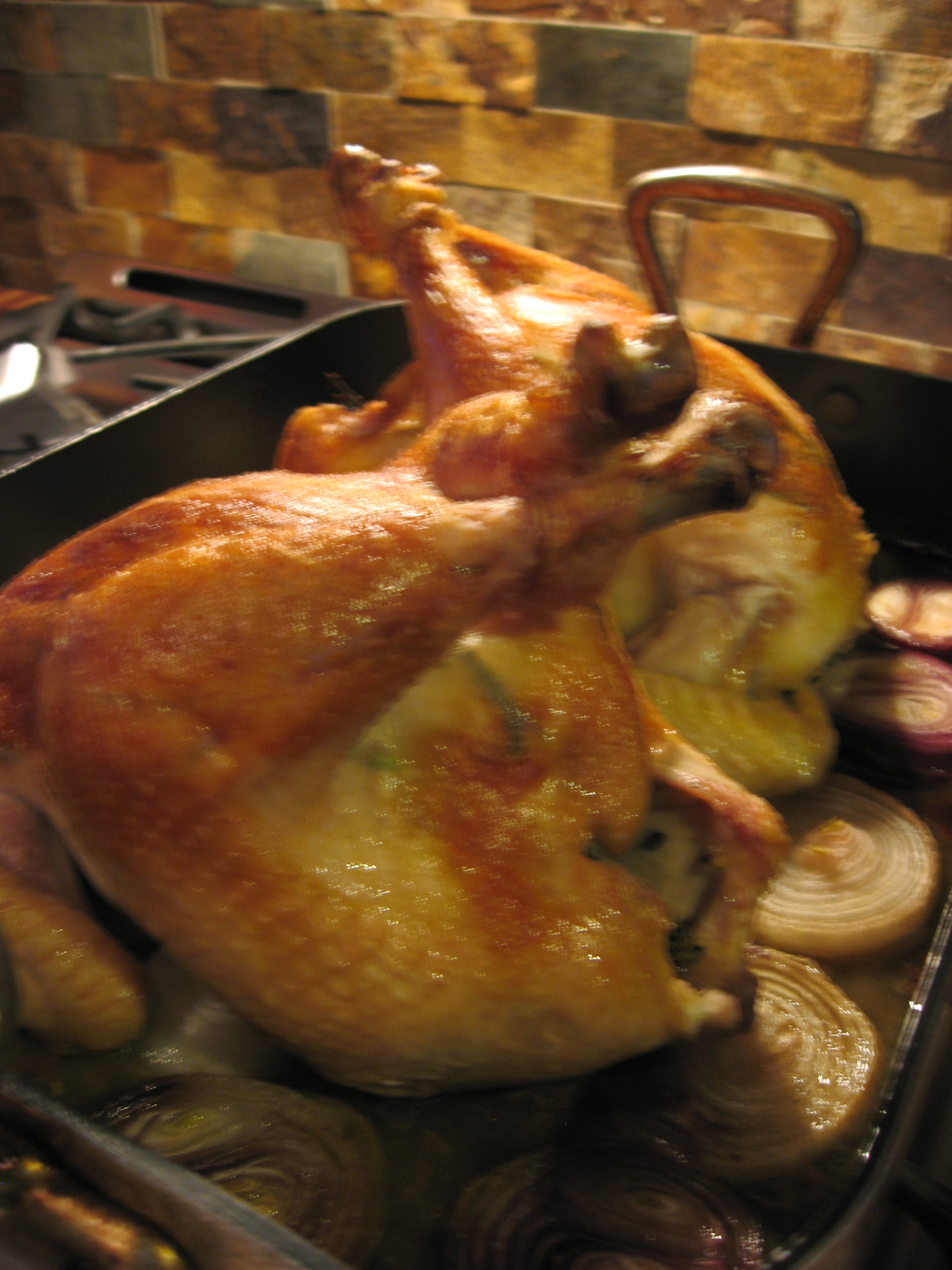
There are many benefits to home-grown meat birds.  Remaining some of the best poultry available,  they are tender and flavorful.  In the past when I used commercial birds, layering garlic or herbs between the skin and muscle was virtually impossible without tearing the skin.  Home-grown birds have well-developed, elastic skin that easily separates from the muscle for flavoring.  We also routinely roast two birds at a time, giving us the option for making home-made roasted chicken stock (that is fabulous in soups) as well as chicken-pot-pie and other recipes requiring roasted chicken.  If you have the option of using roasters from a local farm or not, this roasted chicken recipe is one of the best.  You will never buy deli chicken again.

Perfect Roasted Chicken

  • 1 six pound roasting chicken
  • 3 Tbsp unsalted butter, softened
  • Kosher salt and freshly ground pepper to taste
  • 2 large onions, sliced 1/2 inch thick
  • 1 lemon
  • 1 head garlic
  • 4 sprigs fresh thyme
  • 4 sprigs fresh tarragon or rosemary

Preheat oven to 425 degrees F

  1. To ensure even cooking, let the chicken stand at room temperature for 30 minutes.  Rinse the chicken inside and out with cold water, then dry thoroughly.
  2. Place onions in rows in a roasting pan to form a bed for the chicken.  The onions will flavor the chicken and pan juices will form the base for an excellent roasted chicken stock.  They also provide a rack for the chicken, keeping it out of the juice, which prevents it from sticking to the pan.
  3. Take the fresh lemon and roll it on the surface of the kitchen counter to encourage the release of juice.  Pierce it all over with a paring knife and put it along with the fresh thyme and garlic bulb (that has been trimmed to expose the tops of the cloves) in the cavity of the chicken.  The chicken will absorb the aromas and flavors as it cooks.  Place the chicken on the onions breast side up.  Tuck the wing tips under the bottom of the chicken to keep them from burning.
  4. Gently loosen skin from both side of the breast.  Place thinly sliced pieces of garlic and one sprig of thyme on each side of breast, repeat up around the legs.  Bring legs forward, cross them and tie with kitchen twine.
  5. Spread 2 tablespoons of the softened butter over the surface of the chicken.  This is what ensures even browning and the crisp skin we are all looking for!  Season the skin liberally with salt and pepper, then place in the preheated oven.
  6. Roast the chicken for 45 minutes then taste with the last tablespoon of melted butter.  Roast for an additional 30 minutes and check internal temperature.  Breast meat should be 160 and juices should run clear.
  7. When the chicken has finished roasting, transfer it to platter and let it rest for 20 minutes.  This will set the juices. Don’t skip this step, or your beautiful birds will lose much of its moisture and the juices will be sitting on the bottom of you platter.

You will be surprise at the flavor and texture of a chicken cooked by this method.  If you’re lucky enough to have a locally-grown chicken, it will blow you away.  The next post mid-week will explain how to make a roasted chicken stock, that is far better than packaged broth and so easy you will wonder why you didn’t do it before.

Posted in Essays, Rants, Recipes | Tagged , , , , , | 2 Comments

Brickyard’s Brew Ha Ha

I alluded two weeks ago about making beer at the farm.  There are many beer drinkers in our midsts, and it was getting a little expensive to keep up the supply, while holding true to the budget constraints of winter on the farm.  A good six-pack was running over $10 plus deposit.  There was always growlers, but we found that we usually could tack-on the cost of a brew and lunch to the bill as well.  After having lunch at Founders,  our favorite micro-brewery in Grand Rapids, we started discussing the possibility of making our own beer.  Why not?  It would be affordable, fun and hopefully delicious.  How hard could it be?  The brew masters: Val, Lynne and Tim began gathering supplies.  Five gallon fermenting pails, carboys, thermometers, bottles, caps and a spiffy looking bottle- capper were assembled.  The process of making a home-brew, although time-consuming, is not in itself difficult.  The allure of a substantial cost savings is only part of it.  The real attraction is personally crafting a brew for yourself and others.  This is similar to a gourmet cook wowing others with her culinary skills.  After all you can follow a recipe, but brewing beer is indeed a craft.

Sunday’s are currently our beer making day.  The process goes something like this:

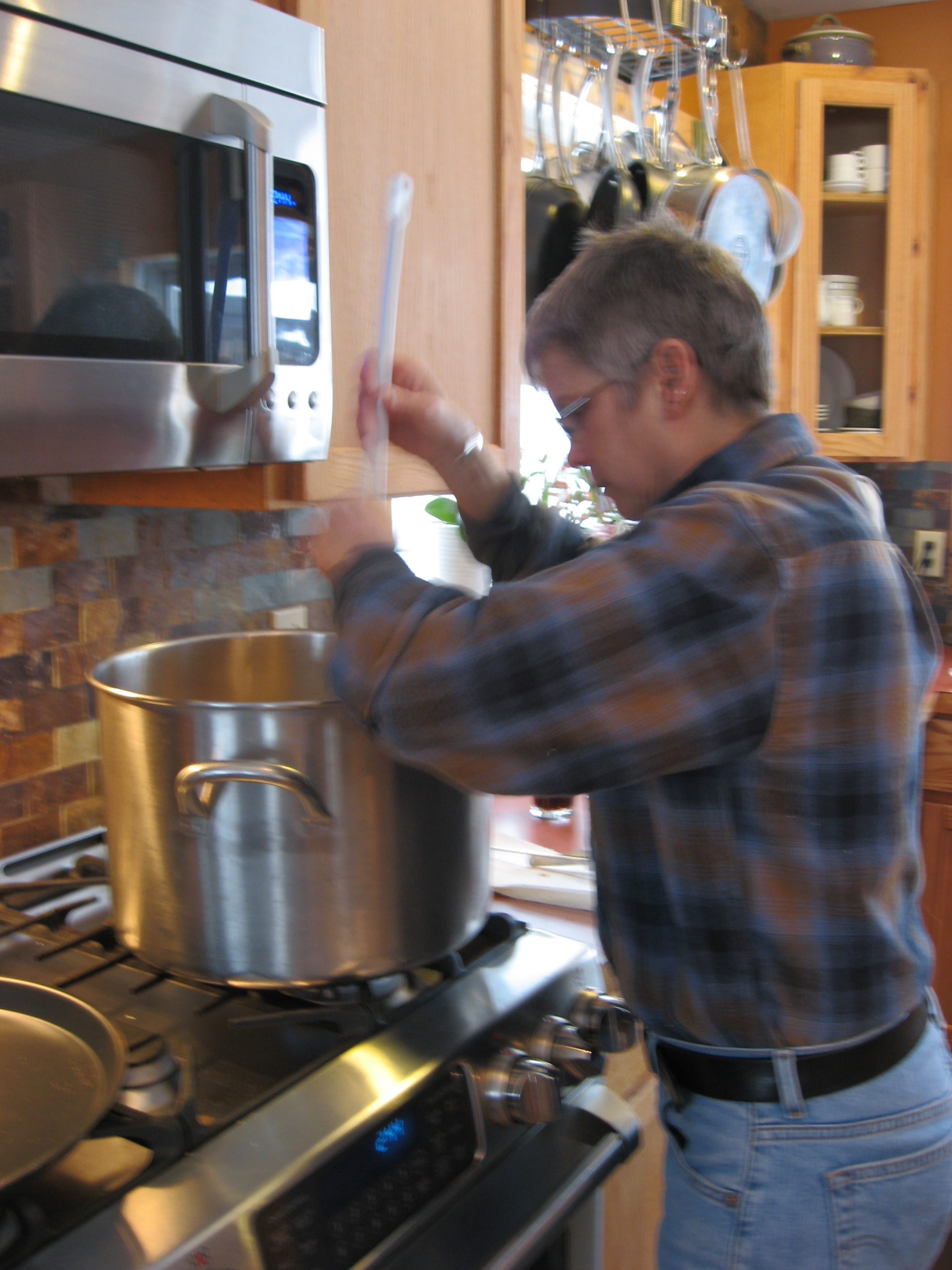
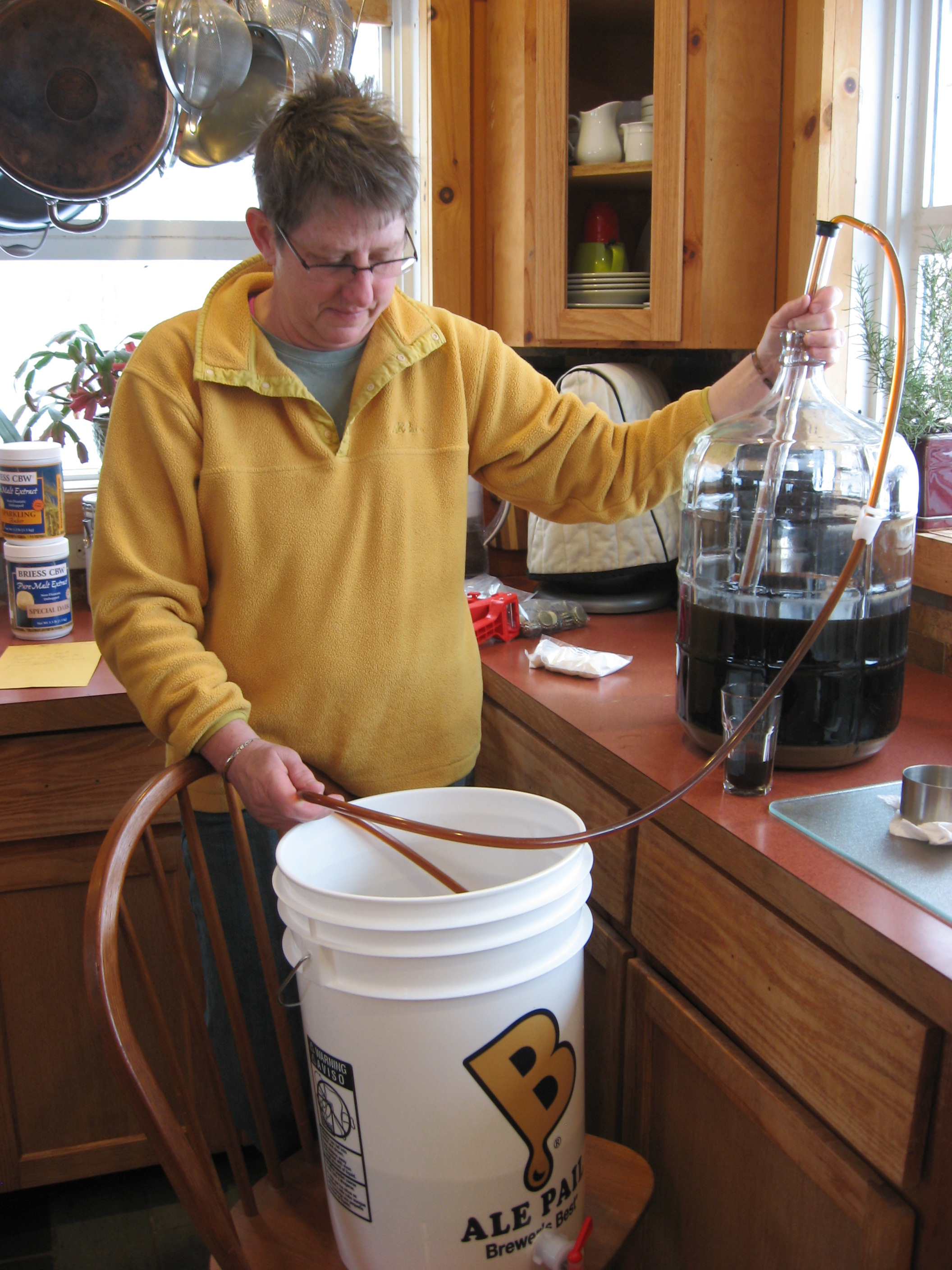
Fill a large stainless steel kettle with 2.5 gallons of water and bring it to 150 degrees F.  To this add a bag filled with cracked grains and steep for 20 minutes.  Take out bag and bring liquid to a boil.  Then add both liquid and dry malts, stirring constantly to dissolve, bringing the liquid back to a boil.  Next add your flavoring or bittering hops and boil for 45 minutes.  After that, add your aromatic hops and boil 15 minutes more.  Cool liquid from 212 degrees F to 70 degrees F (snow works great for this).  Once cooled to 70 degrees, transfer liquid from stainless steel pot to plastic fermenter (5 gallon bucket).  Add enough water to reach the 5 gallon mark, stir in yeast, put on lid, attach bubbler and set near wood-stove.  Let it do its thing for one week.  After one week, transfer the potential brew from the fermenter to a glass carboy.  This is called ‘racking’.  Once again seal carboy with a bubbler and let it rest for two more weeks to complete fermentation and liquid to clear as sentiments drop to the bottom.

Finally, rack the beer into a transfer bucket.  Add 2 cups water and priming sugar.  At this stage you can fill and cap sterilized bottles.  The final process allows for the sugar to act on the yeast and carbonation is created.  In a mere two to four weeks you have your elixir.  In the past five weeks the brew masters have made:  IPA, Oatmeal Stout, India Black Ale, European Bock and Smoked Porter.  Of course good beer should be accompanied by good food.  The following dish got rave reviews.  Make sure you use bone-in pork chops.  It does make a difference.

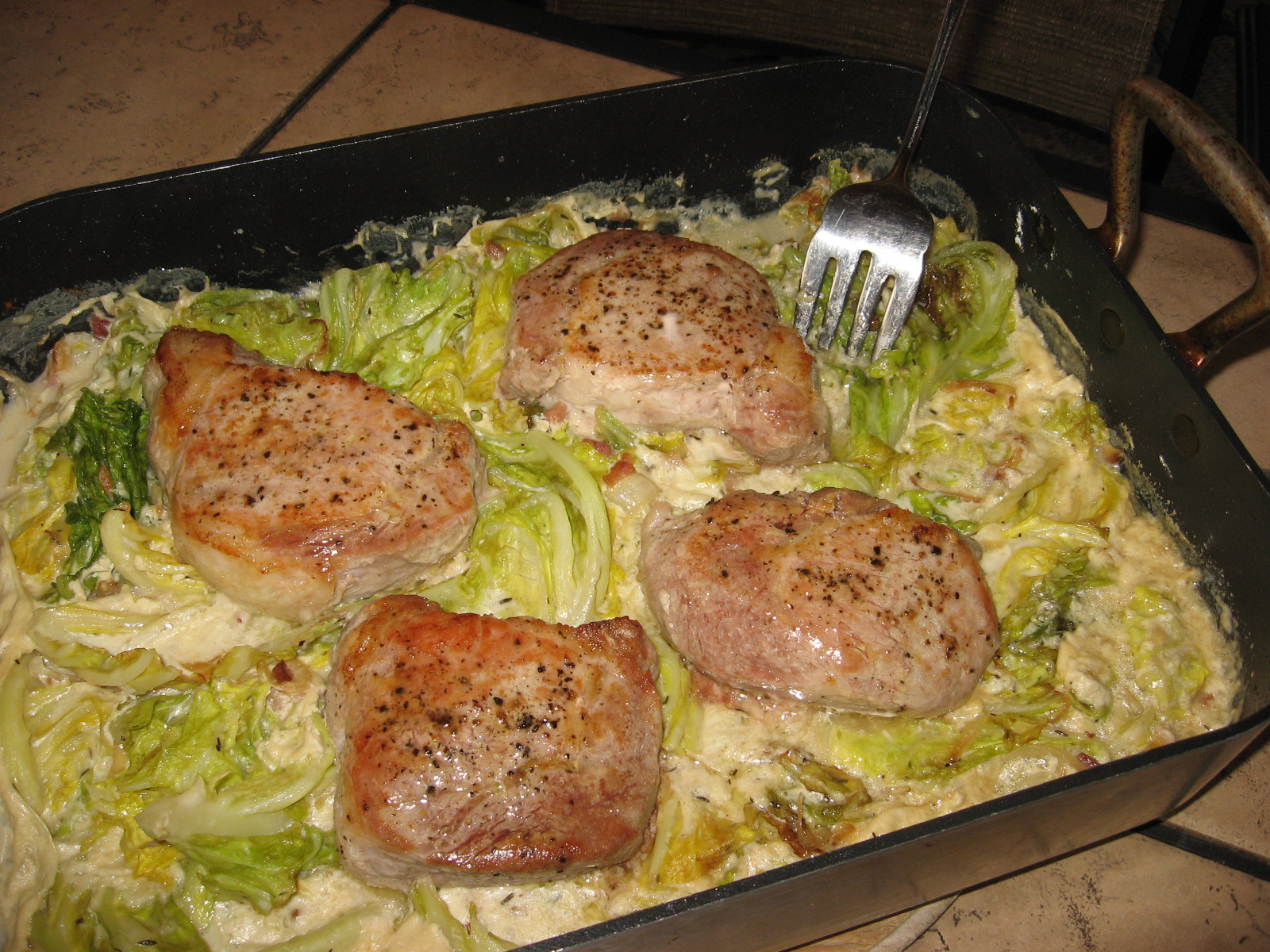
Pork Chops with Cabbage

  • 2 Tbsp olive oil
  • 4 bone-in pork chops, 1 inch thick
  • Kosher salt and fresh ground pepper to taste
  • 3 slices pancetta or bacon, coarsely chopped
  • 1 medium onion, cut in 1/2 inch vertical slices
  • 1 head green cabbage, cored and sliced thinly
  • 3 Tbsp all purpose flour
  • 3 cups whole milk

Preheat oven to 400 degrees F

  1. In a Dutch oven or large roasting pan placed over two burners, heat olive oil on high.  Salt and pepper pork chops and brown on one side 3-5 minutes until golden.  Turn and cook 1 minute more.  Transfer to plate.
  2. Reduce heat to medium.  Add pancetta or bacon;  cook until golden and crisp, about 5 minutes.  Add onion; cook until softened, about 5 minutes more.  Add cabbage and cook, stirring frequently until wilted and lightly golden, about 6-10 minutes.  Add the flour and stir until ingredients are coated.  Add the milk and cook until thickened, about 4-6 minutes.  Season with salt and pepper to taste.
  3. Place the pork chops on top of cabbage and transfer to oven.  Bake until pork is cooked through, about 10-15 minutes.

Good beer, good food, good friends.  Let the good times roll.

Posted in Raves, Recipes | Tagged , , , , , | 4 Comments

Da Wine, Dewalt & Dessert

February is the month for lovers and we were saving a beautiful bottle of Chateau Des Graviers, Cru Artisan Margaux 2002, sent to us during the holidays from my brother Mark for our Valentine’s Day dinner.  We wanted the meal to measure up to the bottle so we planned to roast a beef tenderloin, accompanied with horseradish cream sauce, potato/sweet potato gratin and last but certainly not least…..a fresh pear tart.  In our relationship, I do a lot of the cooking, but the baking belongs to Val.  Every Sunday Val devotes the morning to preparing various bread doughs for the upcoming week.  As we planned our special dinner she was excited about making a fresh pear tart.  We had purchased some stunning Bosc pears that we perfectly ripe.  Anjou pears can also be used.

Fresh Pear Tart

  • 1 unbaked 10-inch pie shell

To make custard:

  • 6 Tbsp unbleached white flour
  • 1/2 tsp freshly ground nutmeg
  • 12 oz unsalted butter
  • 1/3 cup sugar
  • 3 farm fresh eggs
  • 1 tsp pure vanilla extract
  • 3 medium pears, peeled
  1. Sift together the flour and nutmeg.  Melt the butter.  Remove it from the heat and add the sugar.  Whisk in the flour-nutmeg mixture.
  2. Stir in the eggs, one at a time, then the extract.  At this point the custard should be thick and smooth.
  3. Cut the pears into eighths, lengthwise.  Core the slices and arrange them in a circle on the pie shell.
  4. Cover with custard.  Bake at 350 degrees F for 45 to 50 minutes, until the custard is firm and golden.
  5. Sigh.

The tenderloin was roasted to a perfect medium-rare.  As the meat was resting and the gratin finishing, I decided it was time to open the wine and give it some air.  Filled with excitement, I got out my usual wine opener and proceeded to open it.  At least I thought I would….the cork would not budge.  No problem….out came the next wine opener….no luck.  I tried, Val tried, the cork was impurvious to our attempts.  I called our neighbor Lynne who had what we thought was the ultimate wine opener.  Val returned smiling, “This ought to do it!”  Still no luck!  What to do?  Val disappeared briefly and returned with the big guns:  her Dewalt hand drill fitted with a 1/2 inch bit.  Very carefully she lowered the drill bit and slowly extracted the stubborn cork.  Yes, we would have wine!  We poured it through a very fine tea strainer and wha-lah the ruby colored liquid was released.

I started setting the table with our new Provence place mats, good dishes and candles.  I wanted dinner to look special.  Val ground fresh espresso beans to accompany dessert.  I slid a disc of YoYo Ma in the player.  We were almost there.  We looked at each other and smiled.  Our home usually filled with people and laughter, took on a different ambiance.  It was just the two of us making special time for each other.  Private celebrations take on a sweetness all their own.  I arranged the food on the table and served Val.  We toasted our love and commitment to each other and gave thanks for the abundance in our lives.  Da wine lived up to its billing.  Val took her first bite of tenderloin.  “It doesn’t get better than this honey.”

Posted in Recipes | Tagged , , , , , | 5 Comments

Farmers in the Winter

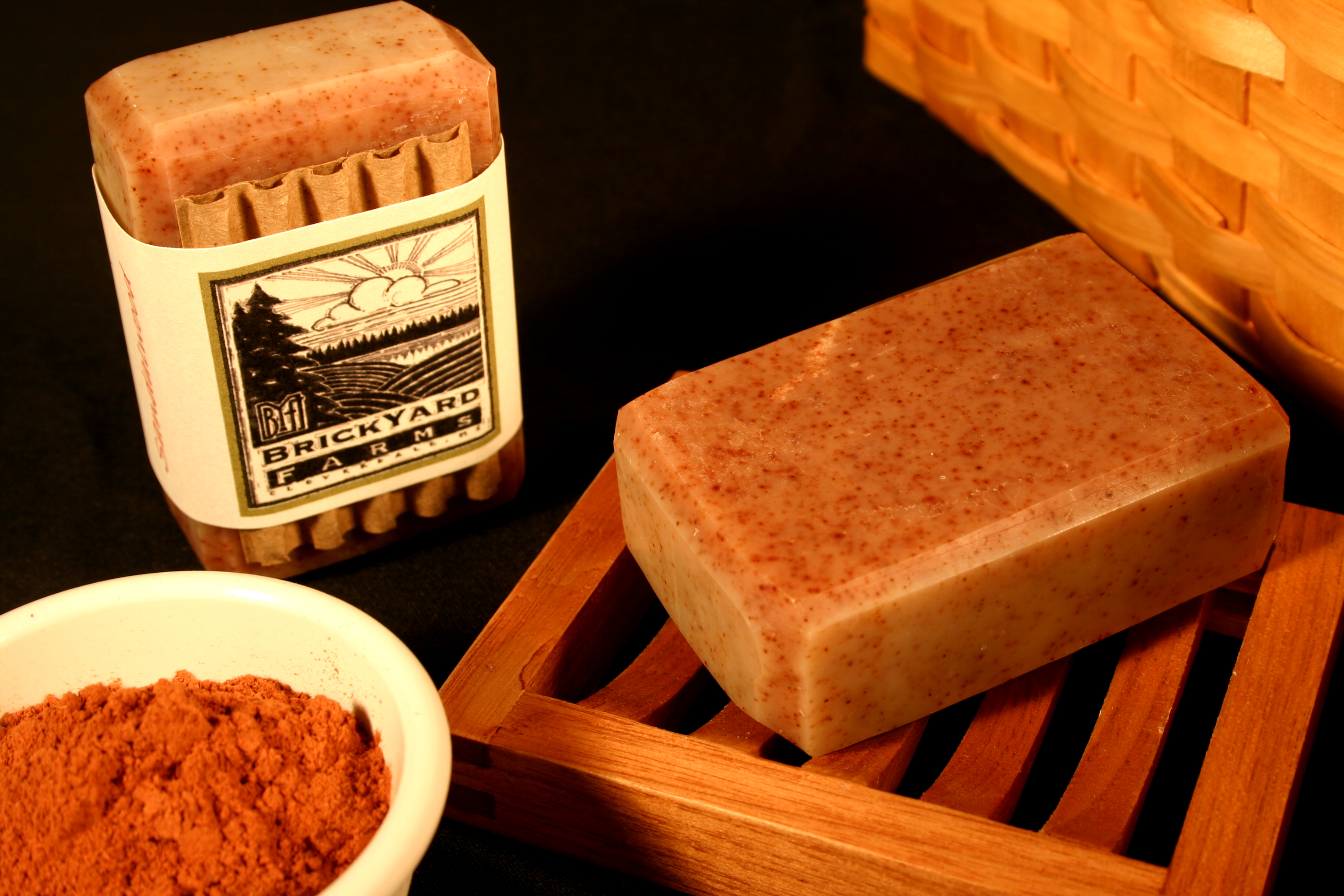
Being a small 5.5 acre vegetable truck farm is focused, hard work from April through November.  But what does  Brickyard Farms do December through March?  Diversify.  We are not only farmers, but artisan soap makers.  We are busy making our soap products in the winter so our inventory is ready to go when our growing season starts up again. Our line of quality products includes, bar soap, liquid foamy soap, lip balm and our very popular night creme.  All our products are completely natural and made with all vegetable oils.  We have been concerned with the cumulative effects of the cosmetics industry’s chemicals on our permeable skin.  Our soaps are handcrafted in small batches, using a blend of olive, castor, coconut, palm and soybean oils.  Next we add natural coloring, fragrance and/or essential oils, and a variety of defoliants,  from spearmint leaves to cosmetic clays and oatmeal.  Our soap bars are naturally soothing and beautifully simple.

Our foamy soap is made without the commercial brands’ additions of foam stabilizers, chemical emulsifiers, surfactants and thickeners.  It also does not include the potentially dangerous antibacterial agents found in most foaming soaps on the market today.  Our foaming soap contains only vegetable oils, potassium hydroxide (this with the oils is actually what ‘makes’ soap), borax (a neutralizer), and fragrance.  You will love its silky, luxurious lather.  It is packaged in a reusable pump bottle and comes in Zesty Lime, Lavender, Lemongrass and Peppermint.  We also have 22 oz refill bottles that fill the pump 2.5 times.

The cold Michigan winters are wicked on our lips, so we developed a soothing lip balm that has Vitamin E, Shea Butter, Jojoba Oil, Wheat Germ Oil, Beeswax and Essential Oils.  Unlike commercial products that contain petroleum in some form, our lip balms stay on the lips and don’t have to be applied constantly for the results you want…..soft lips!  We offer them in four delicious flavors:  Raspberry, Vanilla-Banilla, Mint and Tangerine.

Finally, our night creme.  To say it’s simply amazing would not be an exaggeration.  A combination of distilled water, organic shea butter, hydrolyzed oats, jojoba oil, vegetable glycerin, emulsifying wax, extracts of comfrey, Calendula, arnica and plantain, along with optiphen (a paraben-free and formaldehyde-free preservative).  An all natural and highly effective moisturizer that is wonderful anytime of the day.

So we may be past the growing season, but Brickyard Farms is always busy, with something simmering in the kitchen or being made to soothe the skin.  We love what we do and we do what we love.  Did I mention we are also making beer?  It all started…………

Posted in Soaps | Tagged , , , , , , | 5 Comments

Nourishment

There are times in life when synchronicity is more important than an agenda.  My dear friend Jane who just finished breast cancer therapy called to ask if she could come out to the farm.  What she needed was to put her feet up, a respite, a break from the many concerns she had been carrying for the past 9 months.  There was never any question that she would be welcome.Jane & Val Within a few more hours, two more friends, Beth and Judy called to join us.  We had all met during a woman’s weekend.  Although we are very different from one another and range in age from 43-62, we came together at a pivotal time in each others lives.  A deep bond was created that has held for over 15 years.

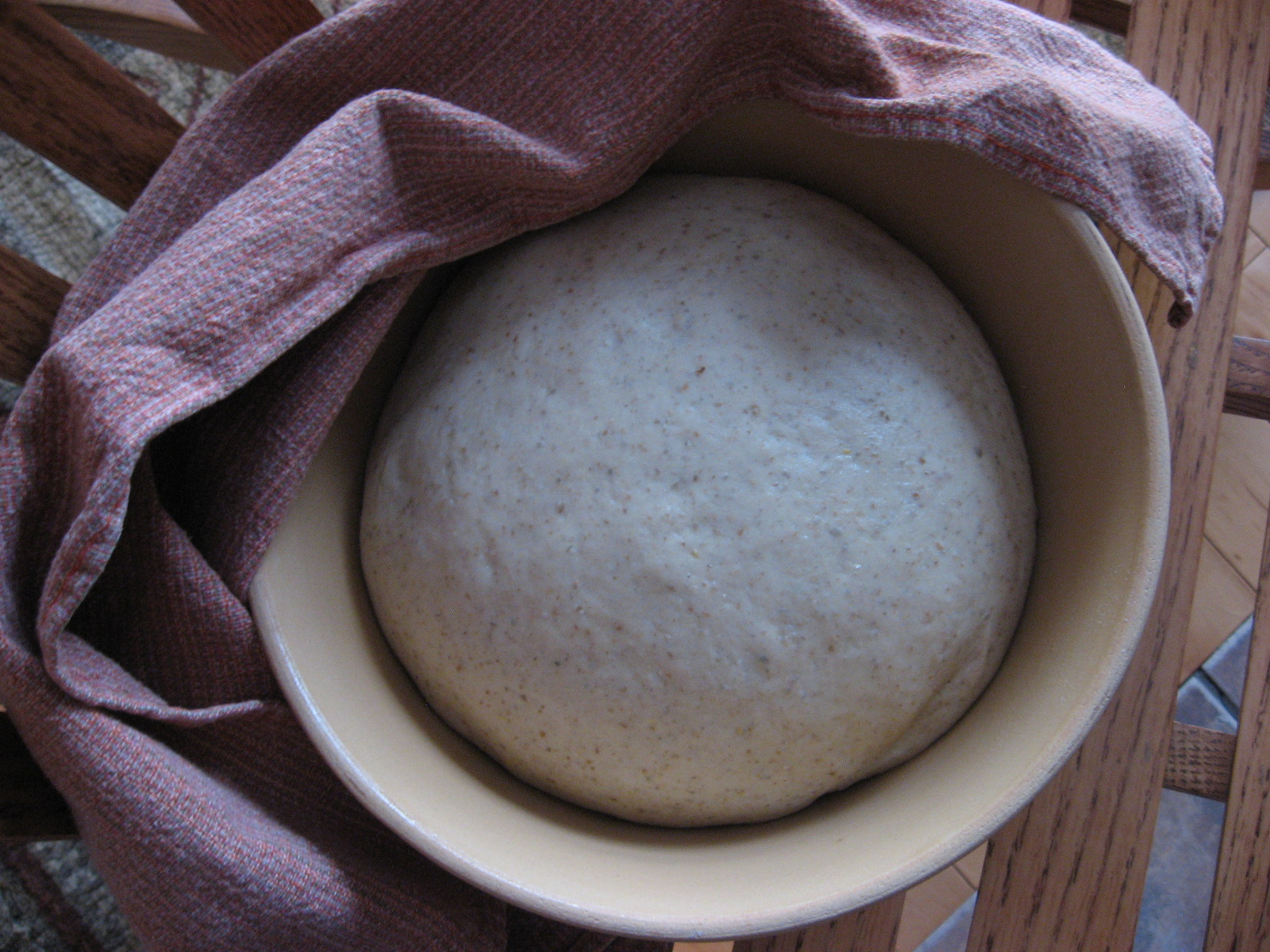
After each of them arrived and settled in we started talking about comfort food.  Laughter ensued when we began to realize how many comfort foods start with ‘p’: potato chips, pretzels, pasta, peanut butter, pastry, pizza.  We settled on pizza.  Jane commented how if she was at home they would order out and pick up.  She knew it would not be the case here.  Val being Val had made a dough a few days ago from Peter Reinhart‘s Everyday Artisan Breads; thinking that movies and pizza go hand in hand.  The toppings would be our Brickyard Farms Pizza:  home-made pesto, artichoke hearts, kalamata olives, goat cheese and smoked provolone.  We put up dozens of jars of pesto during growing season, when the basil is abundant and flavorful. Here’s the recipe:

Pesto

  • 4 cups basil leaves
  • 4 cloves garlic
  • 1/2 cup toasted pine nuts
  • 1/2 cup Italian parsley
  • 1 tsp kosher salt
  • 1/2 to 1 cup good quality olive oil
  • 1/2 cup Pecorino cheese
  1. Drop the garlic through the feed tube of a food processor.  Stop and add basil, pine nuts, parsley and salt.
  2. Process adding the olive oil slowly through the feed tube to make a smooth paste.
  3. Stir in Pecorino cheese.

Yield:  1 cup pesto

Next thing we knew our neighbors Tim & Stephanie have dropped by to say hi and meet the gals.  Steph brought a roasted tomato sauce for one of the pizzas.  Next thing we know, martinis and beer are flowing, all of us thinking the more the merrier.

Brickyard Farms Pizza

  • 1 12-inch prepared pizza shell of your choice
  • 1 recipe pesto
  • 1 15oz can quartered artichoke hearts, rinsed and drained
  • 1 cup pitted and halved kalamata olives
  • 4 oz goat cheese, crumbled
  • 1 1/2 cups finely shredded smoked provolone cheese
  1. Pre-heat oven to 450 degrees with a cold pizza stone.
  2. Spread pesto over pizza crust.
  3. Place artichokes in a pin wheel shape over pesto.  Fill in with olive halves and goat cheese.  Top with smoked provolone.
  4. Bake 8-10 minutes or until cheese is melted and crust is crisp.

There is nourishment for the body, nourishment for the mind, nourishment for the heart and nourishment for the soul.  –Laughter is brightest in the place where the food is.


Posted in Recipes | Tagged , , , , , | 4 Comments

Cannellini Bean Soup

Ok, winter is officially here.  I looked at the thermometer this morning to see -10 degrees…..Brrrrr!  But the sun is shining and its a great day to stoke the wood stove and make a pot of Cannellini Bean Soup. Here at Brickyard Farms, we grow an assortment of dried beans.  The flavor is so much better than with canned, and they can be ready in short order with the use of a pressure cooker.  Cannellini beans, also known as white kidney beans, are among my favorite dried beans with their creamy texture and rich flavor.  They marry easily with many ingredients and compliment recipes for dips, sides, stews and soups.

There are many approaches to bean soups.  I use a basic bean soup recipe that can be steered into many directions.  That way you can add meat or not, use chicken or vegetable stock, enrich it with herbs, spices or roasted garlic.  Today, I’m making a more traditional soup, using roasted chicken stock ( from my Basics with Twist cookbook), ham and for depth: roasted garlic.  While I’m making soup, Val is baking Struan bread.  The smells in our kitchen are wonderful.

First, pressure cook 2 1/2 cups dried cannellini beans that have been picked over and soaked over night.  For even cooking, be sure the beans are covered with water or stock.  In this case I use water and add 1 Tbsp of olive oil per cup of beans (this prevents the beans from foaming as they cook), so in this case I am adding 2 1/2 Tbsp of oil.  I use the bean cooking chart in Lorna Sass’: Great Vegetarian Cooking Under Pressure, which calls for pressure cooking these beans for 5-8 minutes and letting the pressure come down naturally, which cooks them an additional 4 minutes.

Next, preheat the oven to 400 degrees F.  In a glass pie-plate or double layer of aluminum foil (shiny side in) place 4 bulbs of garlic with the tops of each clove trimmed 1/8th of an inch.  Drizzle 3 Tbsp of water and 2 Tbsp of olive oil over bulbs.  Add a sprig of fresh thyme and cover pie-plate with foil or bundle double layer of foil to seal.  Bake for 40 minutes.  Let cool and remove pulp from each clove.  Put in mini-food processor with 1 tsp kosher salt and pulse into a paste.  Set aside.

  • 2 cups onion, finely chopped
  • 1 1/2 cups carrot, peeled and diced
  • 3 garlic cloves, thinly sliced
  • 2 1/2 cups pressure cooked beans, drained (alternatively 2 cans cannellini beans, rinsed and drained)
  • 6-8 cups homemade chicken stock or chicken broth
  • 2 bay leaves
  • 1/2 tsp sea salt
  • 1 Tbsp fresh rosemary, finely chopped
  • 2 smoked ham shanks (approximately 4-6 oz)
  • 1/2 cup fresh parsley, chopped
  1. In a large heavy Dutch oven, over medium heat saute onion, carrots and garlic in 2 Tbsp olive oil.  Cook until onions are translucent and carrots are soft about 10-15 minutes.
  2. Add the broth, cooked beans, bay leaves, salt, rosemary and ham shanks.  Simmer partially covered, on medium-low for 30 minutes.
  3. Remove ham shanks to chopping board.  Trim fat and chop ham pieces into 1/2 inch dice.  Return to soup.
  4. Add reserved roasted garlic paste, stirring to incorporate into broth.  Reheat and adjust salt.

Ladle into bowls and top with fresh chopped parsley.  Serves 6-8

Let it snow, let it snow, let it snow.

Posted in Recipes | Tagged , , , , , , | Leave a comment